
The Man in the Music Studio: Interview with Film Composer Dominic Lewis
How Dominic Lewis became an established film composer, husband, and father

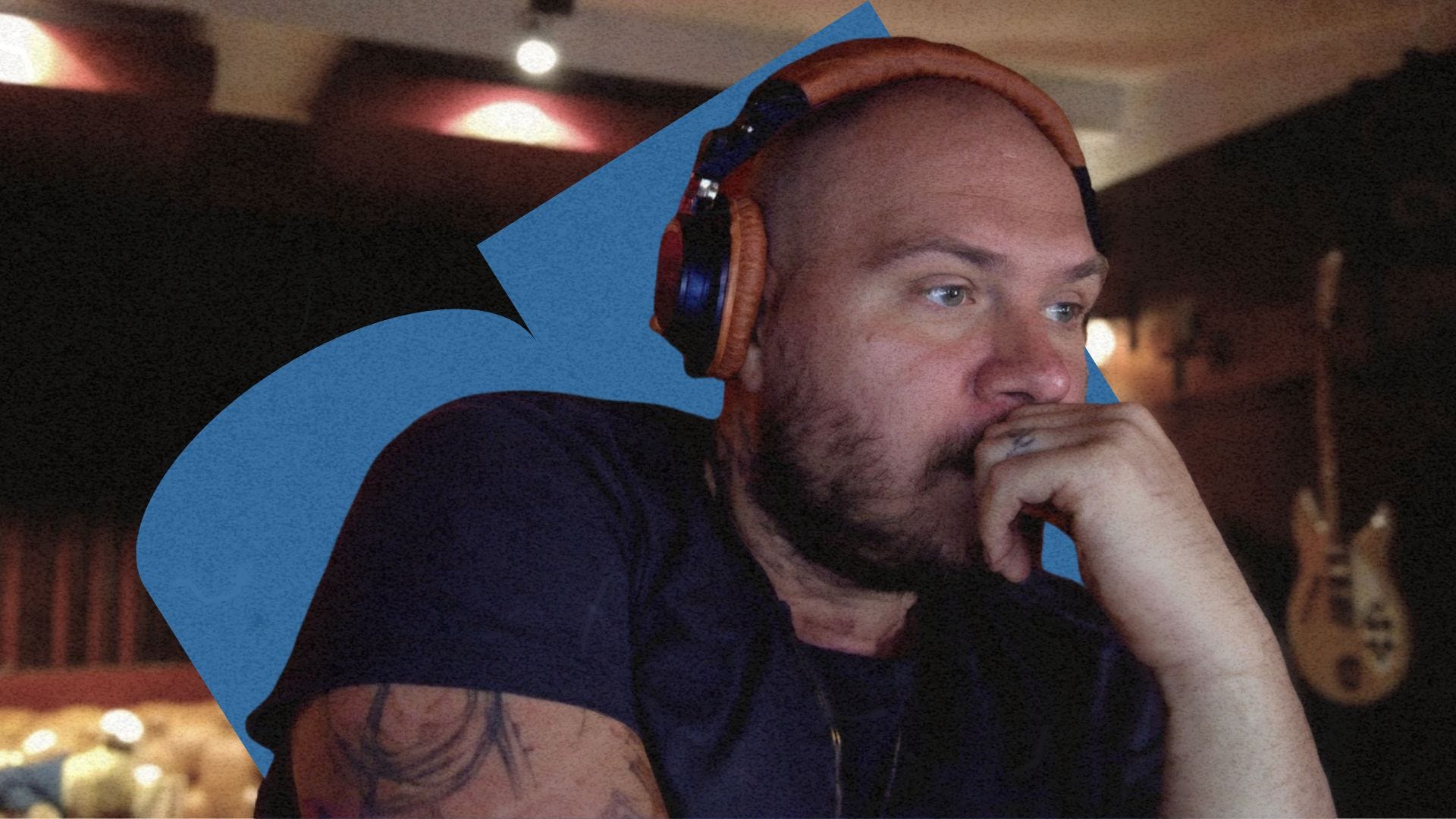
How to Train Your Dragon, Captain America: The Winter Soldier, DuckTales, The Man in the High Castle, Peter Rabbit - Dominic Lewis may not be a household name, but in his time as a film composer, the projects he has been a part of most certainly are known to moviegoers and television fans around the world. Growing up in a musical family, the English composer began as an assistant and worked his way to the top, and continues to find success doing what he loves most - writing music.
Lewis and I recently spoke about his life and career. During our conversation, which has been edited for length and clarity, we discussed his childhood in London, how he got into film music, and his approach to scoring these iconic film and television shows.
I’d love to talk about your life a little bit. You’re from London, right?
I am indeed, yeah.
What was it like growing up there, and when did you move to United States?
London was awesome as a kid. I come from a very musical family. I was always surrounded by music. Both my parents are musicians: my dad’s a cellist and my mom’s a singer. So whether it was being at concerts or music in the house or people coming to our house to learn, music was always huge in my life. I did want to be like Dad—I wanted to play the cello—but sport was massive for me as a child. First I wanted to be a cricketer, which is probably very strange for an American to hear, but then rugby took over and I wanted to be a rugby player. But music was always there. And when I realized I wasn’t good enough to be a professional sportsman, I moved my focus towards being a musician. But there’s so much going on in London especially, just being around the city and just feeding off that did really help sculpt me as the classically trained but eclectic musician I am today.
I’m the same way. I mean, my family … my dad was playing the piano and my mom would sing. And so I was growing up with that musical influence and ca definitely relate to that background. And I played golf, but that was kind of the same thing as you; I was never going to be good enough to go pro.
I love golf and I was alright at it at, like, eleven, but through playing too much cricket I developed this horrendous slice, which I still have to this day.
What are some of the earliest films that you remember watching, films that you remember impacting you a lot when you’re younger?
I used to watch a lot of old war movies—well, they aren’t that old—with my dad. When we were channel surfing we would always land on Where Eagles Dare, The Great Escape, Guns of Navarro, and all those kinds of movies. I remember being smacked between the eyes by the music, just like, “This is insane. This is incredible.” Growing up with classical music and hearing this sort of spinoff variation that told a story was incredible to me.
I’m an eighties kid, so Back to the Future was massive for me or the classic Spielberg movies [like] Jurassic Park. I was a little young for the Star Wars initial push, but that early nineties Spielberg … like Hook was a massive movie for me as a kid. Loved it and especially the music. And that was one of actually one of the movies that really made me sit up and be like, “Wow, music is so powerful.” One of the first movie scores that I bought, and then later on they do those Hal Leonard big scores. “Hook (The Neverland Suite)” was the first I got of those. It’s just always stayed with me.
On the flip side, the kind of non-orchestral—well I guess it’s one of Hans’ more orchestral ones—is Gladiator. That was a massive impact on me as a teenager. My dad played on the score they recorded in London. So that woke me up to Hans. I mean, I’ve always been aware of him, and then when I looked him up, it was like, “Oh, he did this and this and this and that?” I remember watching a non-traditional-score, Requiem for a Dream, for the first time and going, “Holy shit, I didn’t know you could do that; I’ve got to find out how to do that and explore electronics.”
For me I came at it from the opposite side because the movie was what, maybe ‘03? So I would’ve been like eight when it came out. So I kind of came at it from the side of I already knew that it had been used in a million things. But it was neat to see it in its original context.
Yeah you don’t wanna watch that movie when you’re eight, that would really mess you up. [laughter]
You went to the Royal Academy of Music?
I did, yeah.
So where did you go from there? How did you come to work at RCP and move out to LA?
I was at school with Rupert Gregson-Williams’ stepdaughter, and through her knowing my love of film music and just wanting to get into it, I met Ru at one of her birthday parties and we got chatting. I don’t actually remember how it happened, but however it happened, I ended up going down to his studio a number of times and he kind of—as much as he could because he was so busy—took me under his wing and kind of would just let me go hang out and sit in the back. He could see that I was really passionate about this genre and that I really wanted to do it.
I think at the time he was smoking, so he’d go out for a cigarette and be like, “Just play around and figure out the samples and maybe try this scene.” So he was a massive part in like the kickstart to me being a film composer, and then he would constantly check in with me. I came out [to LA] after my second year at the Academy while he was working on Bee Movie and soaked all that up. I met Hans for the first time then. The goal was after the Academy to work for Ru. But as I now know, you don’t always have the work that can accommodate that. But he was amazing. He said, “Get yourself out to LA and I’ll put in a good word with Hans and whoever it might be.” And I’m fortunately still here.
One connection led to another.
Yeah. I worked for John Powell on How To Train Your Dragon, which is another crazy story. My friends came over from London who were at college with John. I went over and they gave me glowing reviews, and he eventually gave me a shot on Dragon and I finished the movie with him. So after that was when I then moved to Remote Control Productions and started working there.
I didn’t realize that you had helped work on How To Train Your Dragon. What was that like working under Powell?
John is one of my favorite people. He’s a such a joy to work for. He’s got more talent than you can shake a stick at. I think he’s a genius. I really do. If the baton or torch or whatever you want to call it was to be passed down from John Williams, I think he would give it to Mr Powell. I think he’s just amazing and he’s such a wonderful dude as well. He’s so generous and loyal. I kind of wish I’d done more with him. I got to do Dragon with him and I did Kung Fu Panda 2 with him and Hans. He’s so talented and I owe him a lot.
He was responsible for getting me my first feature. Actually two of my first features! On Freebirds he’d worked with the director previously, but he was on his hiatus and he was like “Listen, I’m not doing it, but here is list of guys that you should interview.” He tells me he pointed at my name and said, “You’re going to get on with this guy the best.” So, you know, he had a big hand in that, that was Freebirds. And then for Spooks: The Greater Good he vouched for me again and said, “No, you need to use this guy, he’s great.” Because a lot of the film had been temped with Bourne. He’s just a fucking awesome dude.
With Freebirds being your first major solo film that you worked on, what was that like finally getting to work on your own?
I had such amazing training from everyone from John to Hans to Henry [Jackman] to Ramin [Djawadi] to whoever I could absorb. You’ll find when you’re an additional composer, you get to that point when there’s a real itch to do it yourself. Like you give it your all for like three or four years. And then you’re like, “I really need to do this myself now.” It just came at the right time. I was getting a bit frustrated with additional music. Still loving it, but just … I was really ready. Because I’d been essentially doing this since I was 15, 16. I’d been through the ringer at Remote, Hans had given me his crash course and shouted at me and shown me love, as had Henry and everyone like that.
So I was ready. It was great and I just had so many ideas that were just streaming out of me. And luckily Jimmy—the director—and I are best buds now; I really gained a close friend on that one. The music was a chance to really show what I could do. I got nominated for an Emmy Award and it was great. And it was that funny thing where you think, “Oh I’ve done my feature, now I’m in. I’m good to go.” And then it was like two years, three years before I got another big film. So yeah, it was not how I thought it would pan out. But I still look back on Freebirds with really fond memories.
You’ve done a lot in the animated genre because you worked for Powell and he does a lot. And even with Henry Jackman…
Right. Big Hero Six, Wreck-it Ralph, Puss in Boots … Is that it? Yeah that’s it for animation with Henry.
I think so. Do you find yourself drawn to animation or has that just been the opportunity that has happened to open up to you?
No, that’s definitely where I would like to put my hat, if that’s even an expression [laughter]. At the Academy I had an amazing teacher called Christopher Austin who has worked for so many people and he’s a classical conductor, orchestrator, composer, arranger. He taught me all of his tricks and he was kind of like a big brother figure. Because I was doing film music at the Royal Academy of Music where there wasn’t a film music course, it was contemporary composition. There’s a lot of snootiness and looking down on you like, “oh, film music, yuck that’s like popular music.” You have to get a very thick skin, and Chris was the guy that was like, “Don’t worry about that shit. You know what you want to do. I’m going to set you up for writing the best possible music. You can write to picture, You know melody, you know harmony. Let’s teach you orchestration.”
And that message has really stayed with me, because I don’t think necessarily you can teach someone how to write a melody. I don’t think you can necessarily teach amazing picture sense. In a way you’ve either got it or you don’t. But orchestration, you can learn orchestration. It’s the academic side of music. It’s the stuff you can read about, and the stuff that you go, “Okay, well if I do that and do that, then I can do those voicings with this.” It’s not quite as black and white as that, but it’s the one thing that you can really learn from a book.
Nowadays, animation is the only place you can exploit your talents in really knowing how an orchestra works. So I think that’s why I’m drawn to it, is because it allows me to write in that style of music that I trained in and that I love and I grew up with … constantly being in orchestras and hearing my dad play chamber music and my mum. And it’s just very natural for me to gravitate towards that type of music.
I’ve noticed the same thing. People like John Williams obviously still can get away with it in any genre, but for the most part, the only place where you see that traditional classical style of orchestration is in the animated genre.
Right! Currently it’s very rare now that you get a live-action movie that 1) a director wants that kind of music, or 2) will support. And you know, either J-dubs is doing it or you’ve got like two or three other guys who they’ll call. So that’s why in animation, it’s easier to get the call and just be like, “Hey, check out what I can do with an orchestra.”
You also write for Man in the High Castle. Talk about that a little bit, and also scoring for television shows in general. How does that differ from film scoring?
It’s the same thing. It’s telling story through music, but the main difference is obviously time. On High Castle I get two weeks to write an episode, whereas if the movie’s not Money Monster I get like a couple months. On Money Monster I got like three and a half weeks, so that did feel like a massive TV show, not in its appearance just in its process. But it kind of all boils down to time—it’s like I don’t have the time to think about whether this is a good idea or not. I’ve just got to believe in myself and my experience that this sounds good. And then you know, you’ve got one more filter as it were, which are the EPs of the show to go, “That’s not right.” And then if they go, “That sounds cool,” then that’s the only kind of barometer you have because everything’s so quick.
High Castle is slightly different now just because there’s so much music since I’ve just finished season three. So it’s kind of second nature to me now. And because I’ve done so much music I can start pushing the envelope a little bit and start exploring. This season I explored a more Bernard Herrmann route and went a bit noir with it. There’s that trust now. They go, “Oh yeah, that works.” But if I’d tried to do that on season one, they would’ve been like, “What is this?” So that’s nice when you get really in with the team and they trust you and they let you do your thing. You can start really exploring different musical avenues, which is really cool.
Right now I’m doing a pilot. I did a pilot a couple of years ago and I forgot how fucking stressful it is. It’s like there’s a turnover every day, like they are unsure of what they want. They don’t know the sound, but think this is kinda cool, but they’re not sure. But luckily it’s like a two week thing and it’s done. So TV, I love doing High Castle, I love doing DuckTales, because again, another fantastic team of people that let me do what I do.
And I enjoy film so much and I really want to just kind of concentrate on film, but when you have a team of such amazing people on a TV show, you can’t help but enjoy it. And so that’s why I do those shows I think. But with movies, it’s just, it’s more of a...you get to kind of get cerebral with it and really go down every route and avenue and see whether you’re actually writing anything good.
Something that Hans said to me when I first started was that your first idea should never be the thing that you go to, and if it is, you have to go through every other possibility before you realize that the first idea was the best idea. And that’s something that really stuck with me and it’s something I try to maintain in my workflow. You know, if I think I’ve come up with an idea just out of my head, I’ll move away from it. Then if 1) I remember it, and 2) it’s actually much better than everything else I’ve come up with, then yeah, I’ll use it.
But the nice thing about movies is you do get time and on the flip side, that’s the bad thing about movies is there’s so much time that things can always be changed. You know on Peter Rabbit we were making changes three days before the movie came out. Now everything’s digital, so there’s no end until it’s in the cinema.
So in short, movies are nice to kind of have a nice big arc and like explore worlds and really get down and dirty with everything and TV is kind of real quick. But that’s also kind of cool because you just get it out of the way and you can just riff and go. So they’re different. I enjoy both. The amount of TV coming out now is just amazing and there’s so much choice. So I think that TV has really stepped up their game...
Especially with streaming, you have all these different services now.
It’s almost too much really. I’m only 33, wait how old am I now? Let’s see, yeah 33. But um, I still feel like a bit of a fuddy duddy like “ugh, streaming.” But I still binge watch. I’m a hypocrite [laughter].
Let’s talk about two specific projects of yours. First, on Man in the High Castle you’ve posted a little bit with you playing the cello and other instruments. So do you play cello on that score?
Yeah, I do all the cello on High Castle. It’s weird. I moved away from the cello so aggressively just because it was just something I didn’t want to be associated with. My dad is such an amazing cellist and I don’t like doing stuff that I don’t think I’m the best at because I’m extremely competitive. It was Hans—through knowing that I play the cello and having a relationship with my dad—that said “Let him be involved.” And I started kind of approaching the cello in a different way. And there wasn’t that stigma of “I’m not a great classical cellist.” I have enough technical ability to use this in a way that augments my writing.
So if there’s stuff that’s within my range, it really helps. Especially in a world of samples and having to mix everything yourself and make everything sound real, being able to pop into the live room and do a few cello parts just to make it sing is awesome. And so I can thank Hans for that; I was always so down on myself about it. But he showed me that there was a different route for that instrument in me.
That’s awesome. And High Castle feels like such an intimate score. I love the feel of the entire score because it feels so personal and I a lot of it is because of that solo cello that’s mixed into it.
Yeah, the solo instruments! I did try and keep it really intimate, and season two gets a little bigger just because of the scale of the storyline. But season three goes back to that intimate vibe in a lot of places. I go big sometimes, but most of the season is character exploration and intimate relationships of instruments to characters. And like I said I kind of went down a Bernard Herrmann route.
Yeah, I’ll definitely have to check that out.
Yeah that sort of small, epic, noir thing that, you know, no one can do apart from him [Herrmann], but I tried. But that’s something that John Powell taught me. In trying to emulate your heroes, you kind of fall short and come up with your own sound. And that’s not to say that you’re copying them, but in an orchestration sense, you know, when I first started on How To Train Your Dragon, he was like, “I’m fine with anything sounding like Prokofiev, Stravinsky, Ravel, Debussy, John Williams. And John is like, “That’s what I do and I can’t do that. So I fall short and it sounds like me.” That kind of stuck with me. So I go by that rule too.
That’s pretty good. And then Peter Rabbit that just came out a couple months ago.
Yeah!
Were there any scenes that were your favorites that were really easy or were there scenes that you had to rework a lot that kept going through different iterations?
It was one of those movies that is so difficult, but you just have this love for it and love for the people. The director, Will Gluck, will be the first person to admit that he’s difficult, but he’s difficult in that he knows what he wants and it’s more about figuring each other out. And he’s not a dick about it, he’s just so smart and has a really different way of thinking about music. He hasn’t really worked with film composers before, he would just use songs a lot. So that was a lot of the hurdle at the beginning.
After like a month or so, I got into his brain, he got into mine and we were coming up with some cool stuff. It just had to keep getting rearranged because of the postproduction cutting schedule.
But my favorite scene ... well the opening is very special to me, both the 2D opening, which is very frollicky, traditional classical music. That is actually the first thing I did and is the cue that got me the gig, funnily enough. But then Peter smashes through the birds and he’s like, “Sorry!” and the actual story starts. That was my first cue; I looked around at Will in the meeting and he was like, “Yeah, I think we’ve found the sound of the movie.” So that would be my favorite just because that was the moment I knew what he wanted.
That’s neat how that works out. A bit more of a personal question. You post a lot on Instagram with your wife, your kids. Has it been a challenge to be able to balance family with work? Especially in an industry that’s as busy as this one?
It’s the hardest thing about the job. It is. Coming in and dealing with phone calls and writing difficult cues and people telling you the cue is not right is like, excuse the pun, child’s play. The balance of it all with the long hours and two very young children and a very tired wife is really tough. That’s why I moved out of RCP; it’s why I moved home. We bought a house last year and the studio was already built in the back. And it is incredible the difference of when we lived in Venice and I was traveling to RCP everyday and not really seeing my son to now being around every day. The difference in our relationship is just … I can’t even explain it. He’s moved on from Mommy and just wants Daddy now, which makes it very difficult to leave the house and come into the studio. It’s tricky right now because I have a newborn so there’s just no sleep going on whatsoever.
But before Quincy was born, I was sort of getting to a place where it worked: being there for breakfast, being there for lunch, being there for dinner, being there for bath time. And I could do that and just come straight back to the studio and carry on working. It was something that John Powell said to me as I was getting serious with my wife. He said, “Listen, if you want to stay married and not get divorced, I would seriously consider at some point moving your studio home.” And so when I felt like I was sort of losing contact with my son, it was really digging a horrible hole in me. I was like, “I’m going to do something about this. I’ve got to make time for family.”
When one is so ambitious like me, it’s one of the hardest things to do: not necessarily sacrifice your work, but figure out that there’s something more important. To have that click in your head that family is important. You can work and work and work, but what are you working for? Those guys! So it took me a while to figure that out and now that I have, it makes life a lot easier.
But a lot of these executives and directors are family people too. And I’m just through being scared of annoying anyone or pissing anyone off. I got to a point probably two years ago, where I was asked to work on Thanksgiving. And I just said, “I can get this to you on Monday, but as you know, you’re going off to Boston and it’s Thanksgiving. So let’s just touch base on Monday.” I expected this onslaught of “what do you mean? we need to fix this!” But it was just met with “Yeah, okay!” And from that point on, I realized of course it’s okay because these people have families too. They’re not unreasonable.
It’s just that Hollywood is this horrible whirlwind of “we need it now, we need it now.” And often when you give it to them now they don’t even listen to it anyway. So you have to make it a more attractive proposition. It’s important to set all those boundaries. Last week I was with my kid on the beach and I got called. “Can you come in for spotting session?” And I went, “Actually no I can’t, I can come in on Monday.” And it was okay! If you don’t set boundaries then people will just push and push and push. You obviously can’t do that when you’re starting out, but I’m lucky enough to be four years into my own thing now so I can start to set up those boundaries.
Those first couple of years, your other half really takes one for the team. I mean they just do. And if they don’t then it’s such a hard graft at establishing yourself. If you’re not with the right person, it’s really fucking tough. I’m lucky enough to have an amazing wife who gets it—doesn’t mean likes it, she doesn’t—but she gets it and is fine with it. So that’s important. It’s one of those jobs that if you don’t make those kind of sacrifices, Hollywood will chew you up and spit you out unfortunately. It’s pretty brutal out here.
Well my last question, you got anything coming up that you’re excited about that you’re able to talk about?
No! I’ve finished High Castle, I’ve finished DuckTales season one. Both have been green lit for another season, but they wouldn’t start for a bit. And then I’m doing this pilot and who knows if it’s going to get picked up. Other than that I’m available for hire [laughter]! I’ve got a seven week old baby so I’ve got enough to be getting on with.
You’ve definitely got your hands full, That’s all I’ve got. I really appreciate the opportunity to interview you.
Of course; take care!