
Finding an Original Voice in Film Scoring: A Conversation with Frank Ilfman
Frank Ilfman didn't set out to write for movies. Now, he’s scoring some of the most atmospheric thrillers in modern cinema. Here's how he found his sound.

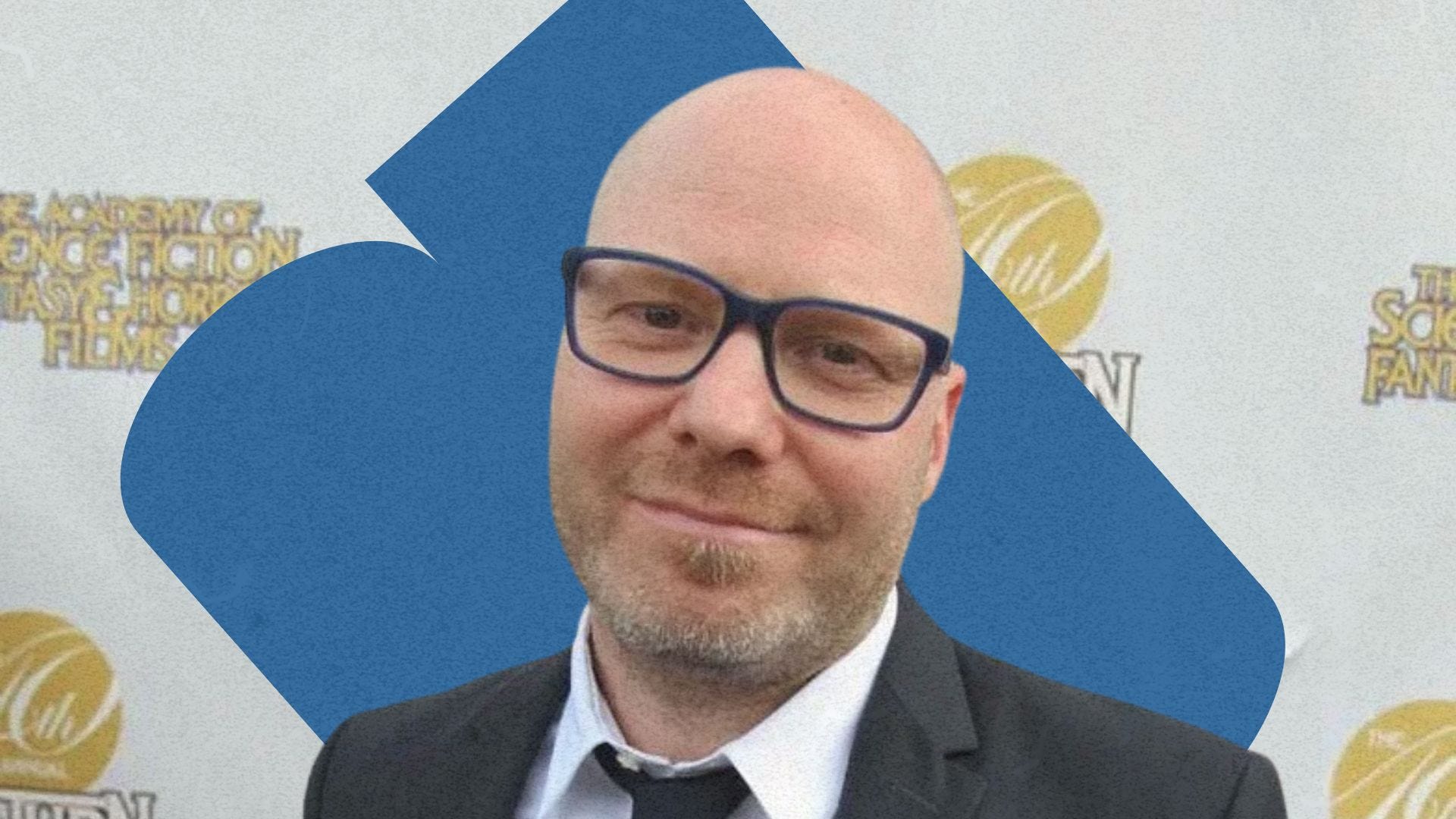
Frank Ilfman’s path to film scoring was anything but traditional. Growing up in a poor family, Ilfman began his musical journey on a trombone and “dingy” organ, teaching himself the intricacies of arrangement by ear. From a chance encounter with Klaus Doldinger to experiments with synthesizers, eventually he found a path to writing movie music.
Ilfman’s breakout moment came with the 2014 black comedy horror-thriller Big Bad Wolves. The film, which Quentin Tarantino famously championed as the best of that year, earned Ilfman a Saturn Award for Best Music—placing him in a winner’s circle alongside legends like Jerry Goldsmith and Bernard Herrmann.
Ilfman and I recently spoke about his unconventional evolution as a composer. During our conversation, which has been edited for length and clarity, we discussed his memories of watching The NeverEnding Story scoring sessions, the challenge of writing the Legendary Pictures fanfare, and why—in an age of digital samples—there is still no substitute for the human element of a live orchestra.
Tell me about your childhood, about growing up, and what your early memories are of music and film.
I never had any intention of becoming a film composer. I grew up in a house where my dad was a big music enthusiast and he loved to listen to all kinds of music. I think I was probably about six or eight—I can’t remember—but he gave me an original recording of The Good, the Bad and the Ugly and that caught my attention. It was more towards instrumental music.
At the same time, we used to go watch movies all the time as entertainment back in the day. It was all these kind of pirate movies, westerns, and Bruce Lee films. I got really attached to film music back then as a kid, but it was never an inspiration of “I want to be a musician” or anything like that. As I grew up throughout the years, I got more connected to music, but more as a rock musician.
When I was about 13, in Germany by coincidence, I met Klaus Doldinger and I got invited to see sessions of The NeverEnding Story. Somehow that made a connection between films and music and how they work together, but it still didn’t connect as something that I wanted to try and do. It aroused more of the feeling of trying to do instrumental music, not just rock stuff.
Growing up, we were fairly poor so we couldn’t really afford a piano. The only thing at the conservatorium that I could enlist to learn was the trombone. I studied trombone for about two or three years. I started as a self-taught arranger for the band that I was part of in that conservatorium. I would take a Thompson Twins song or anything from the 80s and I would arrange it for a big band, just by ear. I would do the chart just by ear. Somehow I switched to playing more keyboards within the Dixie band than trombone.
Were you self-taught on the keyboard too?
I had a piano teacher by then. We couldn’t afford a piano, so I had this really dingy organ, but that didn’t really work. I had one of those old-school Russian piano teachers that, if you made a mistake, they would smack you on the hand with a ruler.
And that just led me to write music. They would give me all these classical pieces to try and practice, which was almost impossible on an organ. Instead, I would just compose some instrumental music. After a while, the teacher just gave up.
I started orchestrating just to see what other instruments do. Then I went and worked as a “tea boy” in a recording studio just to understand how reverbs and compression work and how to record stuff. I did that through my teens. Towards the end of my teens, through a friend, I met some other composers. I was doing rock band stuff, but because my interest was in synthesizers and electronic stuff, I got involved with doing some programming for Anne Dudley for a TV show she was doing in England at that time. That got me more involved in writing instrumental music away from the band. That actually led me to be more of a theater composer. That’s how I started: writing music for theater.
I did that for a few years. Eventually, somebody said, “I’m doing a movie, why don’t you come and do the music for this movie?” That’s how I made the transition from theater music into film music. It felt very natural and it was a smooth transition. It wasn’t like doing any shorts; it was straight into the deep end doing a full feature. Recording live, all on 2-inch tapes and click books. It was a very old-school way of working because back then computers had just started, but I wasn’t even using a computer. It was all done by hand and recorded on 2-inch tape, mixing it into eight tracks. The films were still done on 35mm. It was a completely different ball game compared to now.
Can you talk a little bit about the difference? What is your composing process now? Technology has certainly changed so much about how we’re able to compose. What equipment do you use? How has that changed from when you first started out with handwriting and 35mm film?
Back then, music was more personal from both sides—for the directors and producers and the composers. Whatever synthesizers or first samplers there were back then, you still had the time to go and search and think about what kind of orchestral sound you wanted. When you get to the recording, the orchestral sounds back then were very limited. Anything you wanted to create would have been more on the paper. You would have to verbalize it to the director and hope that they understood. Only when you got to the stage could you show them what you wanted, but then you had the time and the budget to go about it.
I had a bit of help from composers that I met like Earle Hagen and Gerald Fried. These people would give me advice, being mentors back in the day through friends I knew. It was less of a factory manufacturing process. Now, if you don’t know something, you just YouTube or Google it.
And now you can digitally recreate almost any sound you want, whether it’s an orchestra or a synthesizer.
Exactly. Directors and producers on a certain level of filmmaking got used to things sounding so good because of how sample libraries sound today. They come and they say, “Why do we need to record live? It sounds so good.” You have to try and convince them: “Wait until you hear how it really sounds.”
The mock-ups these days are so good, even if you don’t invest a lot of time in programming. But they still don’t properly represent what an orchestra brings to the process once you hear it playing. There’s no substitute for that. In film—more than TV or VOD—when you do a score for a film released in theaters, there is so much detail that comes out through the speakers. If it’s a fake orchestra, you will hear it. A sample is like a snapshot in time, whereas when you record a passage, there is the movement of the air. There is a natural movement that goes with it. Using samples into a film released in cinema still sounds soulless. No matter how good the programming is, it doesn’t sound as good. You can get away with it in action cues, but when it gets exposed, it’s very hard to fake.
These days, I don’t do anything by pen and paper. It’s straight onto the computer because everybody wants to hear a mock-up. Most of the orchestrations—80% or 90%—I’m already doing on the computer as I go along. They get a mock-up that is 90% of what it’s going to be in the recording. There are no surprises. It’s a very close image of what it will be and then we can see what’s working and what’s not. Then it’s just a case of the orchestrators spelling it out for the orchestra and making sure everything is in the right scale and transposed properly. It’s a double-edged sword. On one side, it tells you what a new director wants. On the other hand, they can get used to the temp music or the mock-up and ask you why you need to record an orchestra at all.
In 2014, you scored the film Big Bad Wolves, which actually won the Saturn Award for Best Music, which is a huge honor. Congratulations on that. Were you able to attend the Saturn Awards that year to receive it?
Yeah, we flew in. Both Aharon [Keshales] and Navot [Papushado], the directors, won for Best International Movie as well.
Talk about your feelings that night, because you were up against John Williams and Danny Elfman. There was a very competitive field for Best Music that year. What was it like hearing your name called out and going up to accept the award?
It’s funny because when we did the movie, we knew we had a very good movie on our hands, but we didn’t know how much impact it would have outside or how much it would open doors. It just happened that Tarantino declared it was the best movie he saw that year and that kind of took off all of a sudden.
I remember I got back home one night and I had a message saying, “Congratulations on your nomination.” I didn’t remember anything being submitted. I clicked on the link and, lo and behold, I’m nominated there with Danny Elfman, Brian Tyler, Howard Shore, and John Williams. We flew into LA for that. We had hints that the movie would probably take the International Best Movie, but that was about it.
When it came down to the music and they called my name, I was sitting there thinking, “Hold on, did they just say my name or am I imagining it?” My wife goes, “No, you should go because they called your name!” We were all so happy. We were sitting at the far end of the room, so it took a while to get to the stage. I was walking halfway and shouting to everybody, “Yeah, I’m just coming, give me a second!”
You look at the list of people who won the Saturn—Bernard Herrmann, Jerry Goldsmith—serious names. And there’s me. It was an amazing experience. It was a fairly small movie with a budget under 1.5 million. Very low. We kept the money for the orchestra; we recorded in London. It won several awards, and in 2015, we had a vinyl of the soundtrack released on Record Store Day. It was actually one of the top 10 best sellers that year.
That’s pretty special. What an honor. You have a newer film coming out called Ghost Stories. It’s about a professor stumbling across a file with three hauntings, and he goes out looking for explanations. What was your thought process when you tried to create the right sound for this movie?
What led to Ghost Stories was Big Bad Wolves. Andy Nyman, the director, was at the London premiere for Big Bad Wolves. He loved the score and got in touch with me a couple of weeks after. We met up for a drink and really had a good sync. After a couple of weeks, he called me up and said they were doing a run of the play he was directing with Jeremy Dyson called Ghost Stories. It was very successful on the West End. I went and saw the play, which really left a mark because there was no score in the play. There was no music, yet it was quite creepy. It had a real essence of those old British horror films like Hammer House. There were no fancy effects, but it had that weird creepiness from movies you see as a kid that scare you and make you want to sleep with the lights on.
We had a chat, and he said they were thinking of making Ghost Stories into a movie and asked if I’d be interested. That was about four years ago. I completely forgot about it and did other things. Then about a year ago, I got an email saying Andy and Jeremy wanted to meet up to talk about the music. They sent me a script and a proof of concept of how the film should look and sketches of the characters. I met the guys in their office and we connected well. They wanted something that would be very lush and melodic. They were big fans of Big Bad Wolves, so they knew they wanted a proper orchestral score with proper themes. They wanted a proper opening title sequence, which you barely get today.
It was important that the music be melodic. There is the main character, Philip Goodman, and then the three different cases. We discussed whether to create a theme for the movie or different themes for each case. There was something very sad and disturbed in Goodman’s past. We wanted his theme to reflect that sadness and have an undertone of eeriness—an unsettling feeling.
I’ve listened to the soundtrack a few times and, especially in that opening sequence, you definitely get the feel that this isn’t your traditional horror music. It’s very elegant. It has a feeling of sorrow and a mournful quality. I loved how it has this simple beauty to it.
Frank: We didn’t want the screechy sound design or impacts, although there are bits where you have to do that to try and scare people. But overall, most of the music is haunting, beautiful, and elegant. It’s not un-listenable music; it’s quite melodic. They used to do that a lot in 70s and 80s psychological thrillers like Tales of the Unexpected.
The idea was to have a main theme for Goodman and then each case would have its own individual signature sound and theme. Prior to shooting, I started writing the different themes based on the script and discussions with the directors. I almost had the whole puzzle ready. I would be sent dailies and rough assemblies while they were shooting and I would send them the music. They would play it on set to see how things worked. It was a very old-school way of working.
Once I had all of that and started writing to picture, I deconstructed all the themes into pieces and used certain elements from each piece as small hints. The last piece, the “Corridor of Truth,” has pieces from each one—it’s like finishing the puzzle. Many of those suites we recorded especially for the soundtrack. In the film, you have clues of certain suites, but they are fully playable only on the soundtrack.
We decided to create the soundtrack like an old radio drama sketch from the 50s and 60s. You have a dramatization of the actors talking, then a piece of music and some effects. We took certain dialogues from the movie and inserted them. The soundtrack itself is an audio print-out of the movie in the same chronological order.
Moving topics a little bit: you are writing the logo fanfare for Legendary Pictures, is that right?
We kind of finished it. We recorded with a massive orchestra at Abbey Road a while back. That came on the back of me being in LA for Big Bad Wolves. I got called in to meet Margaret Yen and Peter Afterman, the heads of music for Legendary Pictures. We had a chat about upcoming projects. At the time, they mentioned a Guillermo del Toro movie where they didn’t get along with the composer and there was a chance of me doing a replacement score, but that didn’t happen.
But they said, “We’re redoing our studio logo and we like your way of writing and your sound. Would you be interested in doing the new Legendary logo?” I thought they’d ask me to pitch for it, but they said, “No, there’s no pitching. We want you to do the logo.” They sent me the old logo, which sounded great—that was James Newton Howard. Those were big shoes to fill.
At the time, Legendary were part of Warner Brothers, so the majority of movies were dark like Batman and Inception. I wrote the first batch of versions. Because it’s such a big studio, it takes a long time for approval. By the time it got to the head of the studio, they got back and said, “We’re no longer part of Warner Brothers. We’re now part of Universal.” It had to have a whole new logo because Universal is much more mainstream, brighter, and family-oriented. I had to rethink the logo from scratch. Six months gone!
I came up with a new melody and they loved it straight away. We recorded various versions in Abbey Road. I composed a two-minute fanfare of the logo that we’re probably going to release as a “making of” track in the next coming months. At the moment, the logo is only the 3-second version at the end of TV shows. I think they’ll release the film logo itself early next year.
We recorded a proper orchestra for even the 3-second version. They were very easy to work with. I thought it was going to be much more demanding, but like with Ghost Stories, they let you do what you do. If they feel something is not working, they’ll respect what you do but ask, “Can we try this?”
One last question: do you have any advice for aspiring film composers?
The most important thing is to be true to yourself and be as original as you can. There are thousands of great composers. Everybody is good and everybody wants their chance. It’s great to try and be the next John Williams or Hans Zimmer, but what makes somebody a really good composer is having their own sound and voice. Today, everybody has the same sample libraries, so everyone sounds very similar in their mock-ups. It’s more important to concentrate on how you write and orchestrate. That core defines you and makes you stand out from the crowd. When I do master classes or hear demos, I often find that “singular voice” is lacking—something that makes you go, “Oh, that’s original.” If you have that and you keep at it, everything will eventually click.
Just like with anything, practice makes perfect.
That was my case. I didn’t study composition; I was just doing it, learning from my mistakes and keeping at it. Before you know it, boom! You look back and you go, “Oh, wow.”
I really appreciate you taking the time and giving me the opportunity to interview you.
It’s my pleasure.
Best of luck in the future and wish you the best.
Thank you very much, Christian. Thank you.