

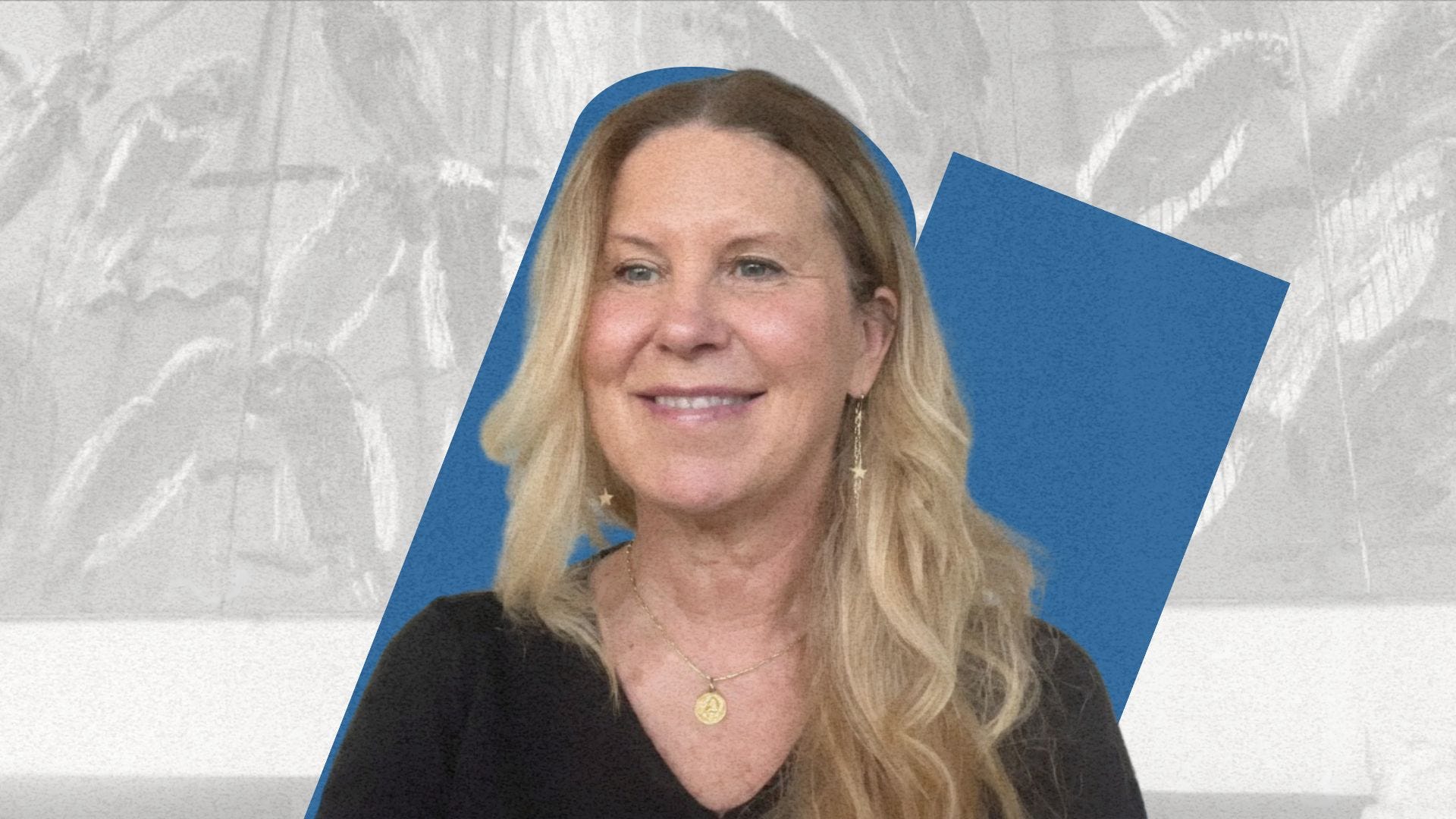
Jeanine Thomas is far from your typical Hollywood producer.
From her background in psychology and education to working for prisons and tech companies (all while raising four kids), she demonstrates a keen interest in understanding and caring for humanity. Her film production debut, The Optimist, represents the culmination of her life experiences and the fulfillment of a decade-long promise she made to a Holocaust survivor.
The Optimist tells the true story of Herbert Heller (Stephen Lang), who kept his miraculous escape from the Auschwitz-Birkenau death march a secret for 60 years, even from his family. That is, until he meets Abbey (Elsie Fisher), a young teenager whose own brush with pain and death inspires him to open up as well, leading the two of them to exchange their stories as a meaningful and healing friendship is born.
The production of The Optimist was itself a feat of endurance. During the pre-production process, Thomas was diagnosed with Stage 4 lung cancer that had metastasized to her brain. She used that sense of urgency to push the film through the challenges of the pandemic and her own ongoing treatment, filming in both the redwood forests of Marin County and the historic streets of Prague.
Thomas and I recently spoke about the making of the film. During our conversation, which has been edited for length and clarity, we discussed her connection with Heller, the casting of Stephen Lang, and how her personal battle with cancer gave her the perspective necessary to finish a story about finding hope in the darkest of places.
Over the years, we’ve seen many events and figures of the Holocaust get explored in cinema. So, what was it about Herbert Heller’s specific journey that made you feel like this was a story that needed to be told?
Herbert was an amazing man. I loved spending time with him, and he told me all about his story, which just blew my mind, knowing that he escaped at 15 by himself after his family had disappeared. That was a big piece. And then he said, “Hey, get me talks in school.” So then I watched him speak to these classes and they really stayed quiet; they really listened and talked to him after. It just made me realize, “Wow, this is a movie.” Not just his story alone, but also how he’s connecting with these kids and giving them a different perspective.
One of the stories that he told me—and he showed me the letter—is that he got letters from all of the kids. One of the first times he spoke at a school, he got a letter from a girl saying, “Wow, I was going to write a suicide note to my parents this week, and after hearing your story, if you can make it through what you made it through, I’ve got this.” There are so many stories like that, and kids are looking for those connection points that give them a reason to stay here and find a reason to stay. That’s why I was pulled to make this film.
Absolutely, the film really does show how Herbert connects with youth in a special way. We hear all about the attention span issues that youth have, and there certainly seems to be a generational disconnect in our world at times. What do you think it was that made his story and message resonate so well with young people?
First off, I think they hear, “Okay, this 88-year-old Holocaust survivor is coming in to speak at your school,” and they think, “Great, we can sit and do nothing.” Then they’re impacted by the fact that he’s up there and he’s funny. For him to tell this story that I think weighed on him a lot more than he let on, he had to intersperse pieces of laughing—making people laugh, and making himself laugh, I’m sure. I think it was a pleasant surprise to these kids. Because it was presented that way, they heard what he was saying more. It affected them more and made them think, “Well, maybe my past does matter.” It gave them a very different perspective: if he can make it through that, why am I complaining about a broken iPhone that my parents won’t fix?
You were there, you had a chance to get to know him and see him talking with kids. During the pre-production process, when you were looking at casting his role, what were you looking for? What was it about Stephen Lang? Were there any qualities that made you think, “Yes, that is Herbert”? What drew you to certain actors to play him?
I obviously wanted someone Jewish and someone that kind of looked like Herbert. Our casting agency out of New York—I didn’t even know who Stephen Lang was—we came up with some different names for them and they said, “What about Stephen Lang?” I had never seen Avatar at this time. And they were like “Yeah, he was in Avatar,” and I said, “That doesn’t mean anything to me.” But I saw his picture and, for me, his picture looked so much like Herbert. I said, “Yes.” Everyone else told me he was an amazing actor.
Fun story: when he showed up to shoot—we shot the film in Marin, California, and also in Prague—the director and I took him out to dinner. He showed up in cowboy boots, dressed up, and he was the most stylish 70-year-old I’ve ever seen. We had a wonderful dinner, and after he left, I said to the director, “Finn, he’s amazing, he’s a great guy, but how is he ever going to play Herbert?” Then I was on the set a couple days later and all of a sudden I saw this guy dressed up like Herbert shuffling along. I did a double take and it was Stephen. He stayed in character the entire time he was shooting. He was amazing. So, back to your question, I let the other people choose because I didn’t really know; I just knew he looked like him. If they said he was a great actor, great. And he was not only a great actor, but just a really good person.
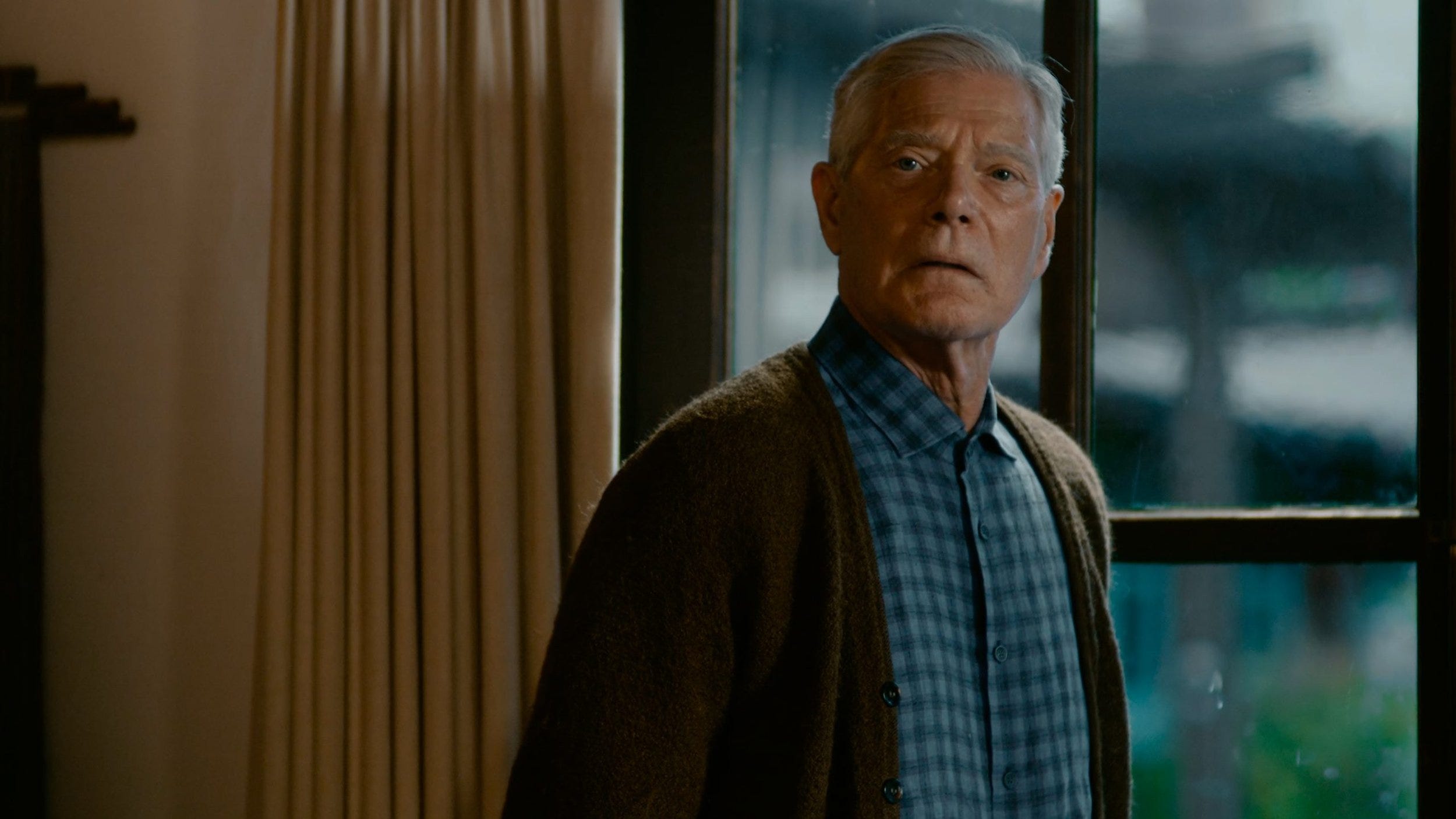
He portrays the role wonderfully. You have a really unique background in education and psychology. How did you feel that background, not being from the film industry, helped you during production? And were there any times where it might have been a hindrance and you had to rely on other people?
Oh, I had to rely on other people a lot, and I still do. If we’re being real, I think it takes a village for anything we do. So, in that realm, it was good. As far as jumping into this, I feel like everything I’ve done in the past brought me to this point to be able to make impactful film and media. The psychology aspect really helped me shape the making of this film. Working in a jail for a while helped. Raising four kids definitely helped. I’ve started other companies and worked in the tech space, too. All of it feels like it was just getting me ready for this.
“I feel like everything I’ve done in the past brought me to this point to be able to make impactful film and media.”
[The team] shared with me a little bit about your personal journey and your battle with cancer. I was wondering if you would mind sharing some of your story and how that impacted your approach to the film?
Yeah. Where do I start? We worked on the script for three years before I got sick. We got the script to a place where I felt we were done, but then COVID hit and none of us knew what to do. The project went on a shelf. Fast forward a year, I was having issues with vertigo. After three months of vertigo, I decided to have it checked out. They did an MRI and found three tumors in my brain. They said, “You’ve got to have surgery right away.” I went to Boston for surgery and they told me there was a 50% chance I’d make it through, and if I did, they didn’t know what my life would be like after.
I sat in my room alone because of COVID. I very much heard a voice say, “If you want to go during this surgery, you can. And if you stay, you have to do what you came here to do.” I remember saying, whether it was out loud or not, “I’m coming back. I have a film to make.” I wasn’t nervous going into the surgery at all. They were able to remove two of the tumors. One of the tumors shrunk from the chemo pills I’m still on today. They tested the tumors and found I had Stage 4 lung cancer that had metastasized to the brain. I had to do radiation for a month. During that time, I called my screenwriter, who then became my director, and I said, “Hey, we need to make this film right away.” We started the process while I was doing radiation. As soon as I could fly, I flew back to San Francisco. That was the summer of 2021, and we started shooting in April of 2022.
Looking back on it now—and I still deal with cancer; I have tests every three months—the silver lining is that it has given me urgency. I don’t take any day for granted. I really wanted to finish this film. It made me jump through hurdles that I’m pretty sure I would have run away from before the cancer. In a way, it was like the universe giving me a gift and saying, “You’ve got big stuff to do here. You’ve got changes to make; make them.” The silver lining of it helped me through this process and to the finish line more than it hurt me.
“I don’t take any day for granted. I really wanted to finish this film. It made me jump through hurdles that I’m pretty sure I would have run away from before the cancer.”
What a miracle. You are so incredibly strong, and I hope you know that. Your story is remarkable. My outlet focuses on finding spiritual themes and resonance in film. Do you think there are any specific themes that stand out in this film that a faith-based audience in particular might appreciate?
I think there’s so much faith in this film, and perseverance for sure. It’s about giving people a reason to live and a reason to go deeper. As far as the spiritual aspect, at least for me, we are all being asked to dig deeper and do better. I feel like this film really helps people do better. It’s very hard for anyone of any age to walk into that theater and walk out the same person. I believe they walk out a better person. The beauty of this film to me is its non-divisiveness, which the world needs right now. Spiritually, again, I feel that message I heard before: “Let’s all come together, let’s all do better. Let’s all create heaven on earth.” I feel like this film is a stepping stone.
We’ve already seen how Herbert’s story united the young people he spoke to, and hopefully this film does the same in uniting audiences. You alluded earlier to the long production life of this film. How did things change from your initial concept to where it ended up?
Looking back on the script, we really created the movie that I wanted way back then. One of the biggest differences was the location. We were originally going to shoot everything in one place, but after I got out of the hospital, I realized we had to shoot in both locations. Prague is Prague; I didn’t want to try to recreate it, and I didn’t want to try to recreate the redwoods either. That change helped the script become more alive.
When I started making this, I thought it would take three years. Everyone laughed at me, and now I get why. But the story stayed the same. Herbert passed in 2021. In my talks with him between 2017 and 2018, I told him, “I’m going to make this film; you’ve got to give me 10 years, you’ve got to be at the premiere.” He said, “No problem.” He was very alive then—alive in life. His wife passed during COVID, and I saw him be ready to go after that. I said, “It’s okay. You’re not going to be here, but I am going to keep my promise and I will finish this film and it will go out to the world.” Honoring Herbert is what helped me keep it the same from inception to release.
“Looking back on the script, we really created the movie that I wanted way back then.”
You always love to hear that the idea made it through even over a long span of time. I did want to ask you about the title. It was called Avenue of the Giants at one point, and then Liberation was discussed. Now it’s called The Optimist. What were the discussions there and what made you feel like The Optimist was the right title?
That change came about this summer. We were in talks with someone about distributing the film and he said, “You’ve got to get butts in seats, and you’re going to need a better title. Avenue of the Giants feels very indie. If it’s on a poster you’re walking by, you might glance at it, but you don’t know what it means, so you just keep walking.”
We all came together, and the director came up with the name The Optimist. We all chose that name for many reasons. Everyone wants optimism today; everyone is leaning towards hope. Herbert is definitely an optimist. His father was an optimist. Abbey, after going through what she went through and moving in a different direction, you could say she has become an optimist.
The working title way back when was Lucky Man. Whenever I was talking to Herbert, he always said, “I just got lucky. I’m just lucky.” I said, “Herbert, you made a lot of your luck happen.” Herbert’s older brother was very academically smart, and Herbert would often have survivor’s guilt, feeling like his brother should have lived instead of him. But I told him, “You weren’t just lucky, Herbert. You grabbed a rucksack that was off to the side. So many people saw that and walked by because they didn’t want to step out of line; you stepped out of line and grabbed it. You got lucky that it was still there, but you made your luck happen.” We didn’t go with Lucky Man because the storyline of the girl took on more importance over time. I felt it was important not to focus on just one person; it was bigger than just him.
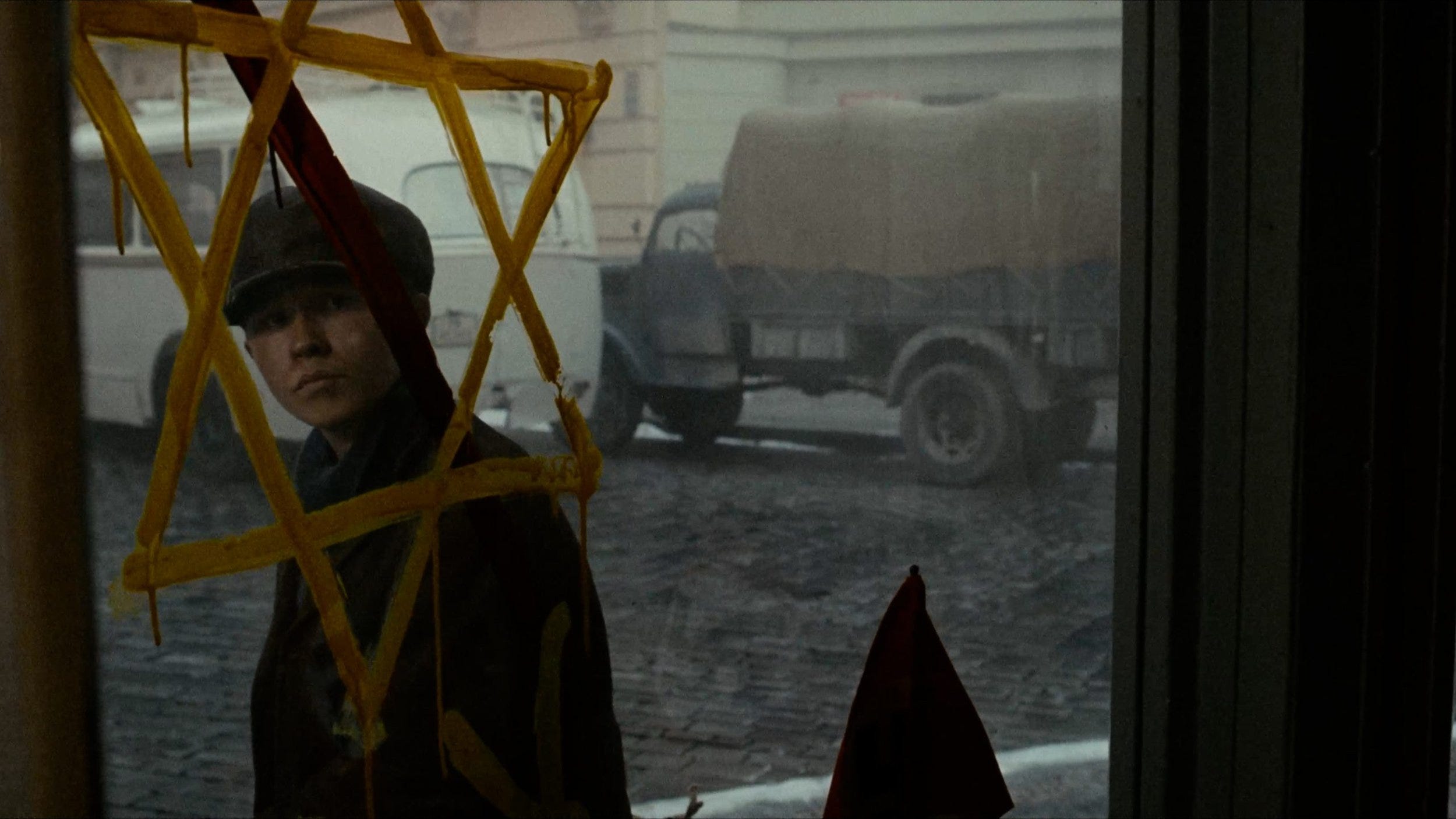
I want to go back to something else you mentioned: the film shooting in both Prague and California. Having seen the film, I can’t imagine having to choose only one location because they are so distinct. Even the coloring is different. You’ve got lots of long, slow takes when you’re in Prague, whereas you’ve got a little bit more handheld work in California. I loved how visually distinct you made the two timelines. Talk to me a little bit about how you differentiated the two.
We didn’t want to go to full black and white because a lot of films do that. If you notice, the coloring is made to feel a bit like sepia. Our production team over there, Stillking Films, was phenomenal. They were absolutely amazing and I learned so much working with them. I am so glad that we chose the two different shooting areas, even though it was like making two movies and trying to put them together. I wasn’t in the editing room, but I had a lot of talks with them. It’s nice that they look so different. That wasn’t my creative genius stuff, but I’m glad it happened.
One question I always like to ask is: Is there anything you wish I had asked you about? Something you haven’t been able to talk about that was important to you during this process?
Well, I feel it’s important to mention that around the film, we’ve created two awareness campaigns with everything I have learned through this whole process. I really wanted to give light to two issues that are near and dear to my heart. With Holocaust survivors, we have over 30,000 to 35,000 living in the US today. Of that number, 30% to 35% are living in poverty. This is something a lot of people don’t know, including a lot of my Jewish friends. We are doing an awareness campaign around that, as well as helping fund a company called KAVOD SHEF, which is out of Tennessee. They help “fill the gap” for Holocaust survivors in need. I feel like that’s important for everyone in the U.S. to know.
For the teen side, we are bringing awareness to an organization called Bring Change to Mind. They’re stepping into a lot of schools and helping kids destigmatize talking about mental health, connecting, and learning perseverance. I’m actually giving 20% of my proceeds to KAVOD SHEF and 20% to Bring Change to Mind. Outside of the film, I’m working on ways to bring down the suicide statistics. For 10 to 34-year-olds, the second leading cause of death is suicide, which to me should be like 1%. I’m looking at ways to help our change-makers of the future, our youth, get excited about being alive, finding their purpose, and connecting with love rather than fear, coming into this world to make it better.
I’ve loved hearing your story and the story of this film. It’s incredible what you were able to accomplish. I really appreciate you giving me the time to speak with you today.
Oh, thank you. It’s been great.
The Optimist is in theaters March 11 & 15. You can watch a video of my interview with Jeanine Thomas below.