
Jocko Sims Interview: Portraying Dr. Tann in Netflix's 'Little House on the Prairie' Adaptation
Jocko Sims on uncovering the forgotten history of Laura Ingalls Wilder’s real-life neighbor and the message of the series.

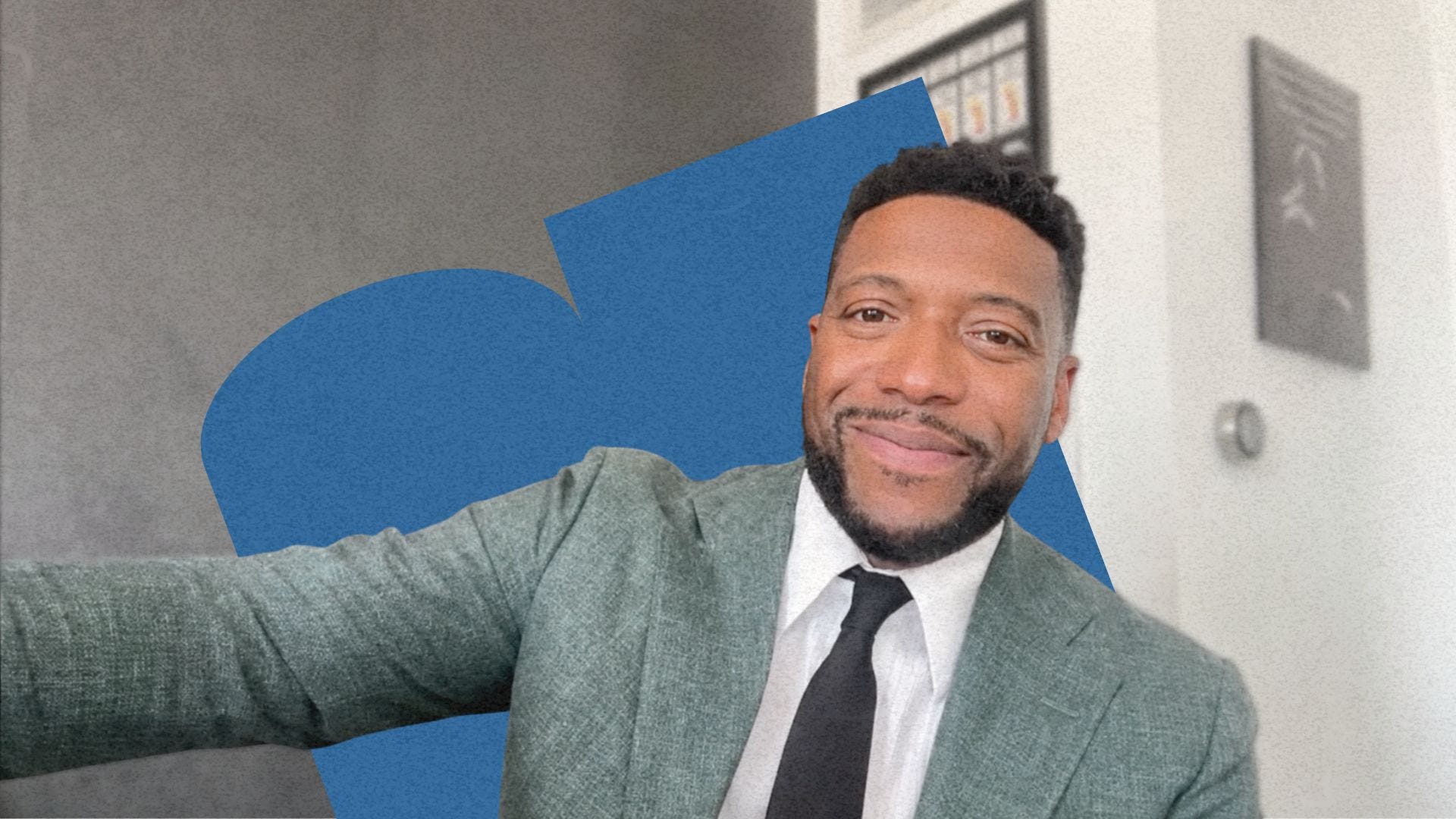
Jocko Sims wasn’t originally planning to be a part of Netflix’s adaptation of Little House on the Prairie. While he enjoyed the 1970s television series, he didn’t want to be involved in remaking such a beloved property.
But after reading the script, he had a change of heart. This wasn’t a retelling of the original show, but an effort to more accurately reflect the tone, characters, and events of Laura Ingalls Wilder’s 1930s book series. For Sims in particular, that meant stepping into the shoes of a real-life historical figure, Dr. George Tann, a Black pioneer and physician who saved the lives of the Ingalls family, but was absent from the 1970s adaptation.
Sims and I recently spoke about the upcoming series and the exciting discovery of bringing a forgotten Black pioneer into the spotlight. During our conversation, which has been edited for length and clarity, we discussed how Sims handles the creative weight of playing a real-life figure, the unexpected confirmation that kept him on the path of acting, and why this timeless story of American perseverance is arriving at the exact moment audiences need it most.
I wanted to start off and ask you: The Little House on the Prairie book series and the ‘70s show are both pretty iconic in their own right. What made you want to sign on to another retelling of such a classic story?
The first show was interesting because I remember watching it growing up, and I thought it was very good and a feel-good show. Full transparency, I didn’t want to be a part initially of rebooting or redoing something that was so beloved. So, I was pleasantly surprised when I read the script and saw that this was not a retelling of the first show. This is its own thing, and this is based on the books that Laura Ingalls Wilder wrote. So, that was exciting to discover.
And through the process of auditioning, discovering that it was based on a true story; discovering that Dr. George Tann was a real-life Black doctor in the 1800s who was friends and neighbors with the Ingalls family, who saved the Ingalls’ lives when they all got malaria, and who delivered baby Caroline... Just to find out that this was a true story—and that people already love the characters, and Dr. George Tann is in the books—it means a lot to me. I’m very excited; I was thrilled to jump at the opportunity.
I was really struck, because I had grown up watching the show, but this was my introduction to the real-life figure of Dr. Tann. Having a Black physician in the 1860s could not have been common, and that really left an impression on me. Clearly, it left an impression on Laura since she included him in the book and he was such an integral part of their lives. Did his importance weigh on you during that shoot?
Yes, absolutely. I mean, the fact that he was a real person and that his family undoubtedly is still out there, I wanted to do it justice. But how I approach doing his role—and I feel like this is my first time playing a real historical figure—I wanted to do my research to learn what I could, what was available, though there’s not a whole lot of information out there.
But then from there, I get on the set and I let it all go, and I let it fall into the subconscious, so as to not worry or stress or be filled with pressure while doing it. It was an interesting first time for me stepping into these shoes, and I have really enjoyed the experience thus far.
Whenever you are on set, how do you balance that weight of researching and doing a real-life person justice, but also making this character your own and doing it justice in the context of the show?
I think the research part of it for me is, more than anything, just fun. Learning that he owned several properties, that he came from Philadelphia, and that he left the city because he felt after the war that the city life felt too small, that he had a wife perhaps that he left behind... All of these things that you discover just make it so much more fun when you’re building the character.
After I have the backdrop of all of those character traits, once I get on the set, I focus more than anything on the scene and what the objective of the scene is. It sounds cliché, but I’ve worked with scene partners who don’t take that approach; they think about what they’re going to do and they think about the character so much, and it’s like we can’t forget that this scene is part of an episode, this episode is part of a season, a season is part of a series, and there’s a message and a point to it that the writers intended.
So, I often love working with the writers to see what the point of the scene is, what the intention is, and what the intention of my character is. That’s where the majority of my focus goes on the days that we shoot.
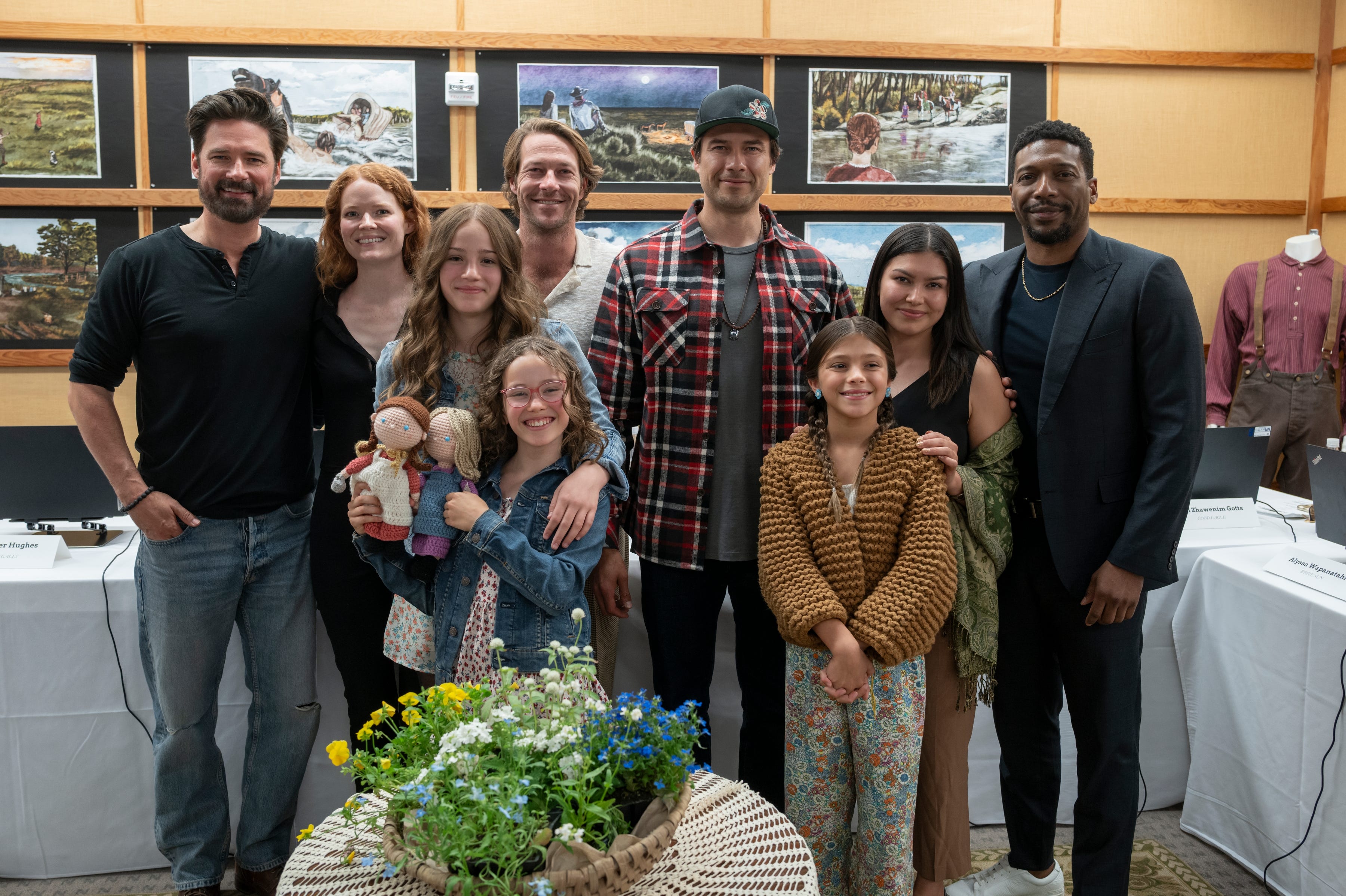
I love that. I want to pivot a little bit. A key part of your story in this season is dealing with the fever that’s starting to spread to some of the characters. Sickness is something that we can all relate to, but watching it as a viewer now, it struck me how much more I could relate to this just a few years removed from the COVID-19 pandemic. Did living through a pandemic impact your performance with that urgency of trying to help and inform the town?
Absolutely. Had I not lived through the pandemic, I would not have known the gravity of a situation like that. It’s very unfortunate what happened to all of us around the world during COVID, but it was very informative when you’re dealing with an episode where there’s an unknown disease going around and you’re just trying to quickly find a cure to save folks’ lives. So, yeah, it’s definitely an influence.
I saw online that back in high school you had originally thought about becoming a doctor. Is that true?
Absolutely.
You’ve now portrayed doctors in multiple shows now, including this one. Do you ever have any “what if” feelings whenever you’re portraying this, like, “In another life, that could have been me”?
No, I’m very thankful. I wanted to be a doctor or a dentist, like you mentioned. I had a medical symbol on my high school ring; that’s how sure I was. Then I get to college and decide I didn’t want to be in school for the next 12 years. So, I took a theater course because I’d always been creative, and I fell in love with it.
I had a dentist that I would go to, and I told him that. This was right when I had made this decision, and it was my first year in Los Angeles, and I was still fascinated with the “doctorness” of the dental experience. I was talking to him and I said, “Man, I was going to be a dentist or doctor, and I don’t know, I’m hoping I made the right decision.” And he said, “You absolutely did.” I never forgot him saying that. Because here’s a guy who had a practice and was doing well, but he said, “If I had a chance to do it all over again, I would pursue something creative.”
Of course, not every doctor feels that way, and not every dentist is going to feel that way. But I think it was serendipitous. It was the perfect timing for me to be there with him to tell me that and give me confirmation. So, I’ve never had any regret, feelings, or “what ifs,” because I’ve had an exciting career and life thus far. It’s been great, and we’re just getting started.
You got the affirmation you needed at the time. And in the first episode, your character offers some really pivotal words of advice and affirmation to the Ingalls, telling them, “You can’t do this alone. It’s okay to ask for help.” That speech really left an impact on me, especially with how isolationist things can feel today. Do you feel like that message is an urgent, important one right now?
I think it is, and I’m glad you bring that up. I really do like that scene, in part because story-wise, when you think of Little House on the Prairie, you think of family and happiness, but the reality is—and you can see this in Laura’s books—it was rough and it was dangerous. In that same scene, Dr. Tann talks about having seen families taken by wolves, freezing to death, starving to death.
But I think this is very timely because as a nation, we’re very divided. You feel this spirit of Laura Ingalls Wilder’s books because even then, when she wrote the books—I think it was during the 1930s, the Great Depression—during that time it was very essential to give people hope, and those books did just that. That’s why from the beginning they were very successful. And so here we are, all this time later and all of these decades removed from the first series. Considering the state that our nation is in as far as divisiveness, I think it’s perfect timing. I think it’s a great message for unity. I think it’s a great message to say, “You don’t need to do this alone. You can’t do this alone.” I think it’s right on time.
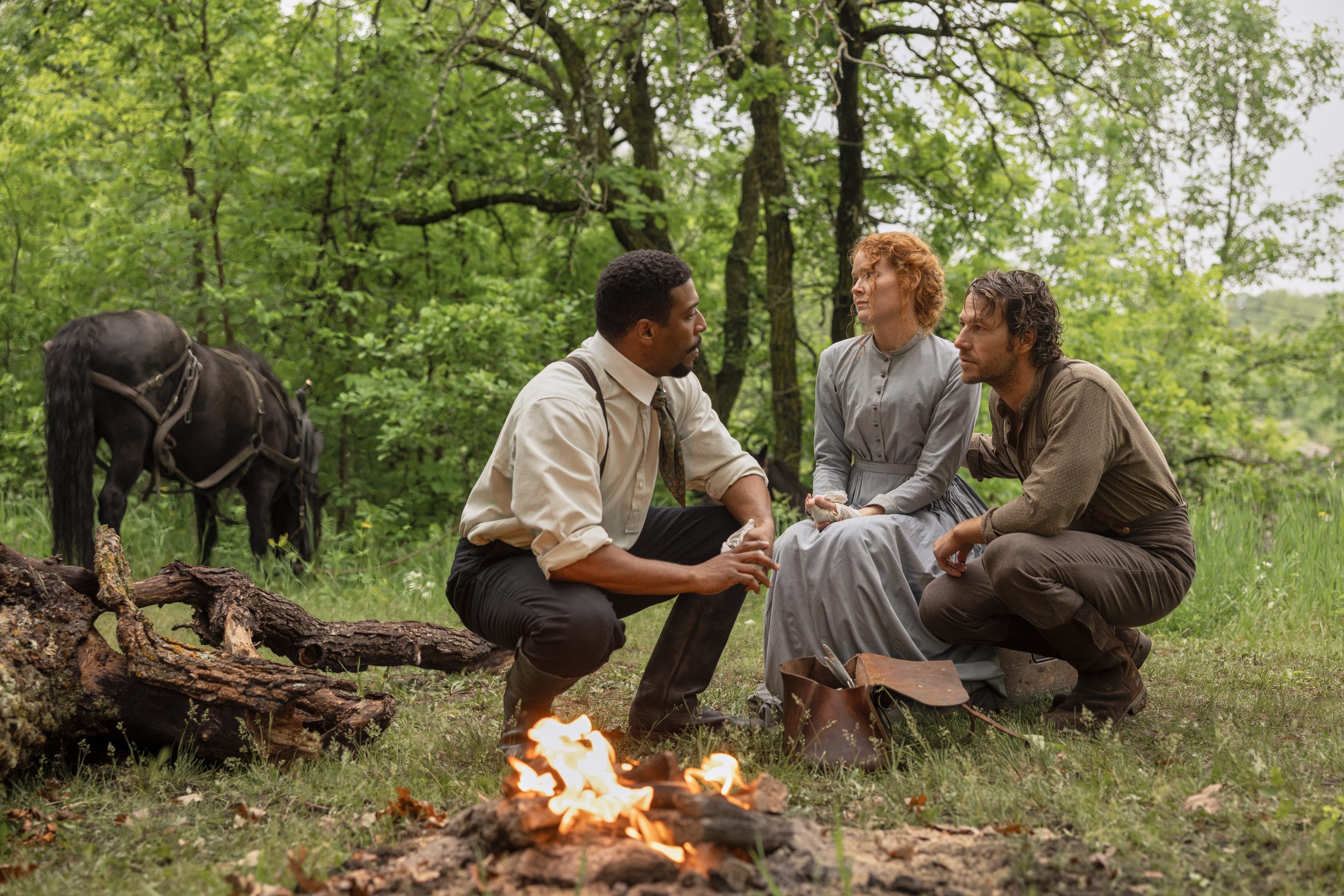
It’s right on time. It’s incredible how these messages are always so timely, but also everlasting, too. It seems like most of your film and television roles are set in the present day or maybe the more recent past. What’s the biggest difference for you working in a period piece set 150 years ago as opposed to working on something set in today’s world?
Well, I can tell you from a production standpoint, it’s a lot more costly. Depending on the type of show, if you have cars, you have period cars, and those are expensive to rent, and then the costumes are expensive to make. Sometimes you don’t have cars, you just have carriages. Where do you find an old carriage? You have to either find someone to build it, or if there’s only two left in the world, they’re going to charge you an arm and a leg to do it. I love producing and writing, and that’s where I want to take my career next. So, as soon as you ask me that, that’s what I think.
As far as approaching it with a character, I think it’s always a little more fun because you have this period to draw from. When you’re doing something contemporary that takes place present day, what are you copying? You’re not, which is fine; you’re just living and breathing and bringing your own life experiences to it. But when you are playing a character from say the ‘60s or ‘70s, to be able to go back and read books, or look at the sort of colors that they wore, or think about politically where the frame of mind people were in, it’s always a little more rewarding for actors to jump into period pieces.
It goes back to you talking about how much fun it is for you to be able to research up front. I’ve got one more question for you: what is your biggest hope for people viewing the show? What do you want them to take away about the story and about your character?
I hope that people understand that Dr. George Tann was a real man, a real person. Hopefully, thanks to Rebecca Sonnenshine, who was our showrunner and is fantastic, and thanks to her, Netflix, and CBS Studios, people will be inspired to tell more stories of Black Americans who were pioneers and who were beloved by their communities. And not always just Black communities; Dr. George Tann was loved by the Osage and other Indigenous peoples. If it had not been for him, there would be no Little House on the Prairie, because he saved the lives of the family of the woman who wrote the books and told us this amazing story.
Outside of that, I hope that people gather around their televisions and repeatedly binge this story because it’s really a great show to watch with your family. I’ve seen all the episodes and it just feels so darn good. So, I hope this is an opportunity—because we’re all on our phones all the time, and I’m the biggest culprit of that—to put your phones down. Unless you want to watch the show on the Netflix app on your phone, that’s fine! But gather around with your folks and enjoy yourselves.
Absolutely. I’ve already been able to watch the show; it’s a wonderful season. I’m excited to rewatch with my wife, too, and maybe some more seasons after that. We’ll see.
Absolutely. Definitely. Season two has already been picked up.
That’s great to hear!
That happened months ago, before anyone had seen season one. So, that was a testament to the job that we did, as far as Netflix and CBS. They really loved it.
That’s got to be so encouraging.
Ready for the world to see. Yeah, absolutely.