
Interview: René Echevarria on the Making of 'The Faithful: Women of the Bible'
Behind the scenes of the upcoming FOX series with veteran producer René Echevarria, exploring the Biblical Matriarchs of Genesis.

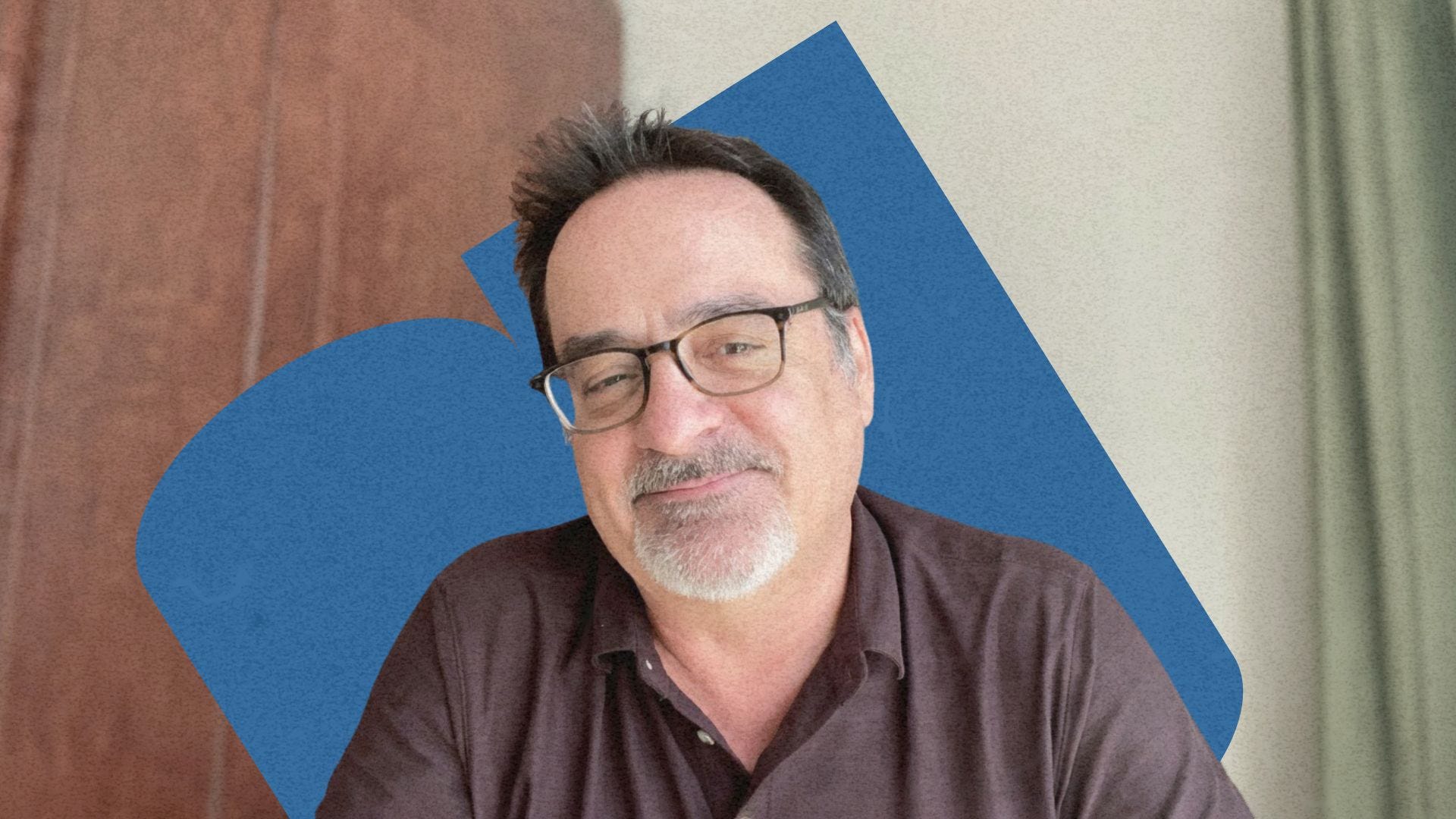
From his early work on Star Trek: The Next Generation to collaborations with James Cameron (Dark Angel), Steven Spielberg (Terra Nova), and Guillermo del Toro (Carnival Row), René Echevarria has spent decades establishing himself as a versatile showrunner and show creator alongside some of Hollywood’s most imaginative minds. But his latest project, The Faithful: Women of the Bible is the answer to a personal prayer offered years ago: “If it please you, Lord, use me.”
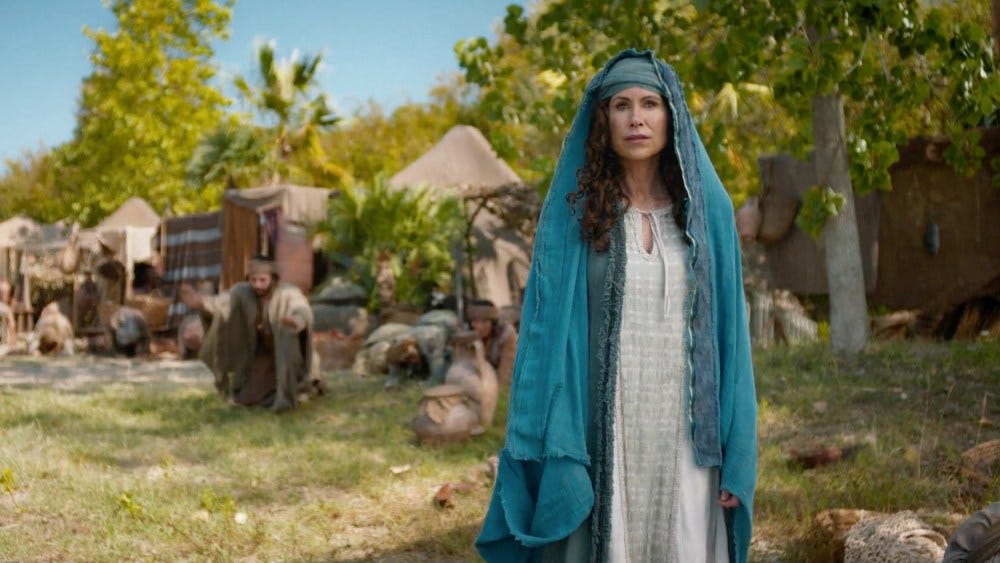
Premiering on FOX this spring as a three-week event starting Sunday, March 22, the series tells the story of the Biblical Matriarchs: Sarah (Minnie Driver) and her servant Hagar (Natacha Karam), Sarah’s great-niece Rebekah (Alexa Davalos), and Rebekah’s nieces, sisters Leah (Millie Brady) and Rachel (Blu Hunt). Filmed on location in Rome and Matera, Italy, The Faithful explores the ways in which these women’s lives were marked by quests for independence, deep-seeded desires, and the search for something greater than themselves.
Echevarria and I recently sat down to discuss the origins of the series and the challenges of filling in the blanks of the biblical text. During our conversation, which has been edited for length and clarity, we discussed his desire for a “God-affirming” project, the creative liberating force of focusing on female perspectives, and the lessons he carried from his time working alongside Steven Spielberg.
I want to start out by getting an idea of how this series originated. Why did you want to tell this story, and why now?
Some years ago, after having been blessed with a long career in this business, I decided that my next project would be something God-affirming, something I could share with my church and my kids. Not everything I’ve done could be shown at church, let’s just say. I put it out there: “If it please you, Lord, use me.” It took a while, but then a writer-producer that I really admire, Carol Mendelsohn, reached out to me years later. She said she wanted to do a project about the women of the Bible. She’d heard I was a believer, and so we partnered up to do it.
Let’s talk a little bit more about this focus on the women of the Bible. Genesis, more often than not, ends up following the male narrative rather than the women. Because of that, you were able to use this series to fill in the blanks, adding events and motivations for these women. How did you and the team go about fleshing out their characters in a way that felt true to their biblical portrayal, even when it might not necessarily be explicit in the Bible?
That’s a great question. It was a very liberating perspective. For example, we didn’t feel the need to tell every beat of the Abraham story in Genesis. There were parts of it that didn’t involve Sarah so much. Abraham gathers an army at one point and rescues his nephew Lot; it liberated us from some of the expected beats that we didn’t need to do. Our true north was always trying to find the emotional truth of what these brave, courageous, bold women experienced. They were also flawed and, like all of us, broken. They stumble and make mistakes. It was a matter of really digging in.
It is possible to read Genesis—especially Abraham and Sarah’s story—and come away thinking, “Oh, Sarah is kind of the bad guy here.” As I pondered that, I noticed she recruits or coerces Hagar to have a child for her and then banishes her later. Those are hard to get your head around. But even though this is true, the Lord validated her choices on a certain level. When Hagar runs away, God tells her to go back. He doesn’t say, “Go girl, you get to Egypt! Be free with your son.” He says, “Go back.” God had something in mind for that child. I think He wanted him to be raised by his father, even if only for the first 13, 14, 15 years of his life. Again, when Sarah convinces Abraham to banish Hagar, he doesn’t like it. He doesn’t want to do it. But God tells him to listen to the voice of his wife.
So when I realized that, I thought, “I’m missing something; I need to dig in.” That’s when I realized she loved that boy, she loved Ishmael. It must have cost her. She didn’t do it because she finally had her own biological child; she did it because she intuited that the situation wasn’t going to work and that Ishmael needed to go find his own destiny. That’s where we ended up. I don’t know if you’ve had a chance to watch it yet?
Yes, I have!
Oh, okay good.
And I loved that aspect. I thought that was a really good perspective on things because you’re right, we do see Sarah—at one point she refers to God as her “husband’s God”—she almost offloads it on Abraham at first.
Exactly.
It was interesting how you played into the doubt; she laughs at God’s plans when she hears she’s going to have a son. I want to go back to what you said about showing that these are flawed and vulnerable people. A lot of people define faithfulness as unwavering perfection, but the show really highlights the doubts and flaws of our main characters. How would you define faithfulness in the context of a show called The Faithful?
Wow that’s a good question. All three of these stories that we tell—the first one is about Sarah, Hagar, and Abraham, the second one is about Rebecca and Isaac, and third is about Leah, Rachel, and Jacob—they all mess up. They are just finding their way. The last thing Carol said to me before I went off to write the first script was: “René, write them like they don’t know they’re Bible characters. Like they don’t know they’re in the Bible.” That was really good advice and I shared that with the other writers that we ended up hiring and even with the actors.
Part of what I learned along the way is that yes, they stumbled and made a mess of things at times, but God always made good. God blessed Ishmael, even though Ishmael came into being because Sarah had taken matters into her own hands and lost faith in the promise. Rebecca felt God called her to make sure Jacob, the younger, was chosen over Esau, the older. That was not how things were done at the time, and it put her on a collision course with her husband. So it’s another story about a marriage; very relatable I hope. And the third story—Leah and Rachel—sisters falling in love with the same man. That’s a very different kind of marriage and has its own complications, yet if it hadn’t been for that, there wouldn’t have been 12 sons, the 12 tribes of Israel.
God makes a good work, as Romans says, for all those who are called to Him. That is the big takeaway that I came to. We often share that verse during trials, but those words can ring hollow when you yourself are the one in a trial. These stories are reassuring of that truth Paul speaks of in Romans.
God makes a good work, as Romans says, for all those who are called to Him. That is the big takeaway that I came to. — René Echevarria
Do you have a favorite episode that viewers can look forward to? Do you have a favorite child? [laughter]
There are pieces of each one that I really love. The third one is a lot of fun in a scandalous but heartfelt way. The first one is probably the most jam-packed. There was so much story there, and sometimes it was a challenge to fit it into a two-hour allotment. There are things about the second episode that I really love; it’s a very romantic story for Rebecca and Isaac. She leaves her home and marries a boy sight unseen. That really intrigued me. Why did she do that? And then she becomes a fierce advocate for his God, even though she wasn’t raised in that tradition. She came alongside Isaac very powerfully to sustain this covenant. The way that all played out is one of my favorite parts. It was there where we most had to read between the lines to find something that felt true.
I’ll give you a little hint, you’ll have noticed in the first episode we don’t actually depict the binding of Isaac. We decided to do it in the second episode and play it as something Rebecca helps him process. She marries a man who went through something very traumatic. We know what it meant to Abraham, but imagine being the object of that test. I really liked how that turned out.
I had noticed the binding of Isaac was missing from the first episode and figured you couldn’t fit everything in. But no, you saved that for the future.
Yeah, yeah.
You also mentioned the first episode is jam-packed, covering Sarah from a young age all the way through her death. What were the challenges in telling a complete, cohesive story when you’re covering someone’s entire life?
That is a challenge, and I don’t think I’ve ever done that before. These stories take place over decades, which had repercussions in casting. We have young Jacob and young Esau, and then we see Jacob’s boys growing up. It was a casting challenge to track. You have to choose your hero actor playing the character for the majority of the time and then backfill. That was an interesting challenge.
So how did you tell that life story in just an hour of television?
In the one you saw about Sarah, you hear Hagar’s voiceover throughout. We didn’t originally write it like that; we added that spine in the editing room. It used to start with young Abraham and Sarah, but then we realized the story really is really about Hagar and Sarah. So that moment when they first see each other on the banks of the Nile, we realized that could be used to frame things. That voiceover helped the audience know when and where we were. We used titles to tell you where we were, show how many years had passed and used the kids growing up as easy visual clues.
That voiceover really does tie it all together. Looking back at your career, you’ve worked with filmmakers like James Cameron, Steven Spielberg, and Guillermo del Toro. What’s the best lesson or filmmaking advice you’ve heard from one of them or anyone else you’ve worked with?
One thing that stayed with me was hearing Steven Spielberg talk about casting. What he responds to is a sense that the actor is listening to the other actor. That they hadn’t come in and decided what they were going to do and exactly how they are going to play it. Actors should trust that they know the words, and in the moment they need to listen and react to what the other actors are doing. He would see people and say, “No, she wasn’t listening; no he wasn’t listening,” and move on. He has great instincts about these things.
It’s a small thing, but I can see it making a huge difference. Last question: What do you hope Christian audiences will take away from this series? And if non-Christian audiences happen upon it, what do you hope they take away?
The way you framed that question makes it easier to answer. Because Carol and I were always aware that we had two audiences. There is the faith audience who knows these stories—there’s no suspense other than “how are they going to handle these challenging passages in scripture?” Then also there is the audience tuning in because they like period dramas or Minnie Driver or whatever it might be. We always were careful to speak to both.
I’ve heard from folks who watched it with their husbands and then got out their Bibles to talk about the choices we made. They were engaging with our slightly different perspective. More than that, it’s my hope that people for whom these stories are dim memories from Sunday school long ago will go to their shelf, pull off a dusty Bible their grandma left them, and crack it open. God can do His thing in their hearts. That is my hope.
It’s incredible what you’ve accomplished. I love your witness and your role in telling these stories. I really appreciate your time today.
It was fun talking about it. I appreciate you having me.