
The Legacy and Music of Saving Private Ryan
How John Williams uses (and doesn’t use) music to tell an epic war story.

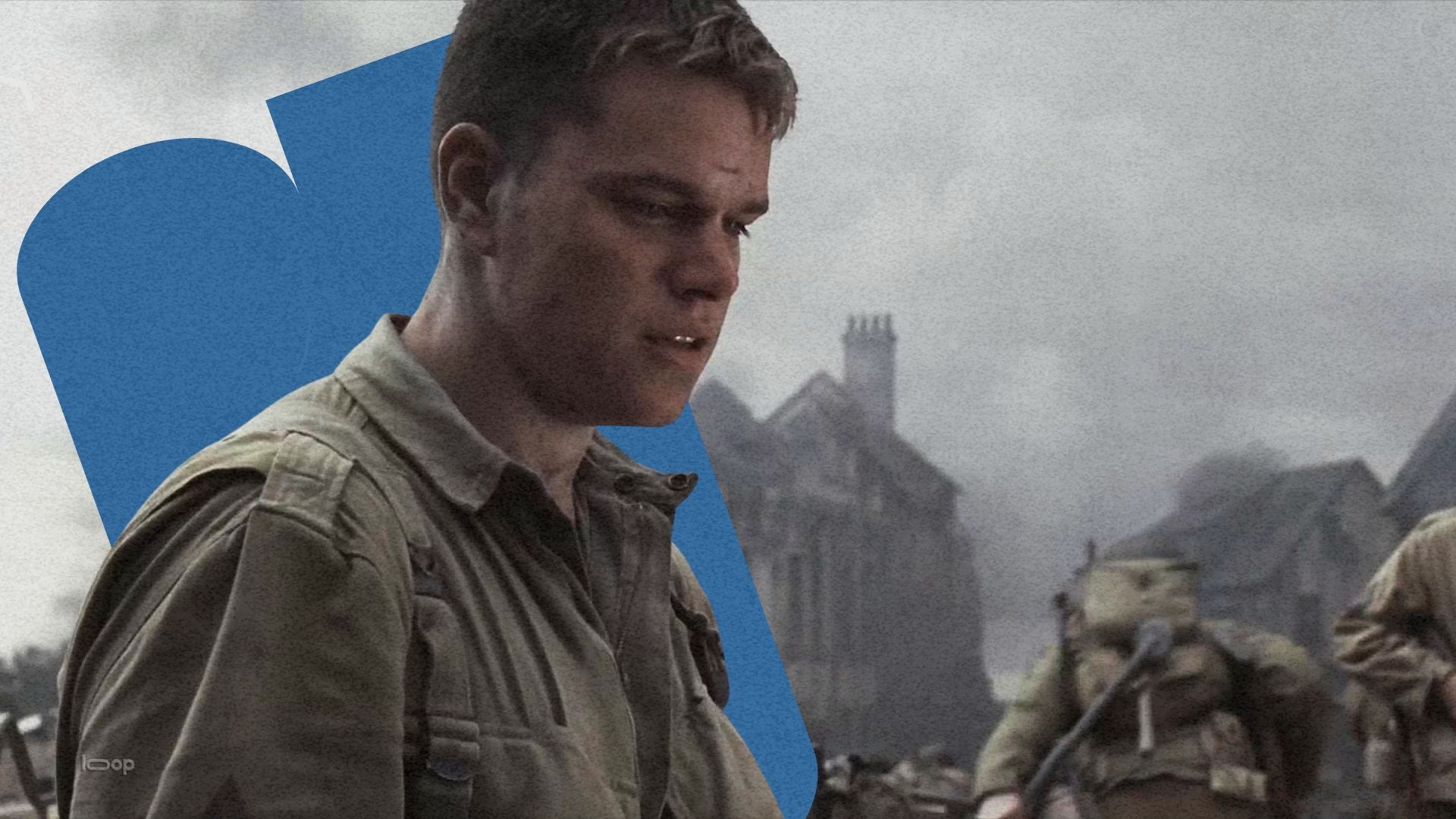
I recently joined Noel Manning on Meet Me at the Movies to discuss my pick for “practically perfect cinema.” I chose Saving Private Ryan, focusing on its use of music and sound design to compliment Steven Spielberg’s epic war film. I’ve written out many of my thoughts from our discussion below, covering my background with film music, my personal experience with Saving Private Ryan, and what makes this score just so effective.
My love for film and film music is so intertwined that it really is the same story.
As long as I can remember, I was into film music. Whether it was watching the Disney Renaissance films of the 90s or the classic Rodgers and Hammerstein musicals, musical films were always playing in our house. so as a kid, it was just ingrained into me: film and music are inextricably intertwined. The films that were most perfect in my mind were the ones where I loved the music.
As I got older, that love of music in film inevitably turned into a love of film scores. John Williams was a huge influence—I was obsessed with Star Wars, Indiana Jones, E.T., all of his collaborations with Steven Spielberg and George Lucas. And then Hans Zimmer was my other inspiration—from The Lion King to Pirates of the Caribbean to The Dark Knight trilogy. I was always looking for the music in a film, whether it was a musical or just a memorable score. And that culminated in my love for Saving Private Ryan.
When I was in high school, my orchestra conductor Peter Strickland knew about my dream of becoming a film composer, and he let me borrow my very first conductor score, which was “Hymn to the Fallen” from Saving Private Ryan. He told me to take the sheet music home for the week and study it. I bought the single on iTunes, sat down with the conductor score, and played that piece hundreds of times on my iPod, following along with the score one instrument at a time. I’ll never forget him letting me borrow my very first orchestral score. And of course, that made Saving Private Ryan a significant part of my love for film music.
About the Saving Private Ryan Score
Saving Private Ryan received critical and commercial success upon release, receiving eleven Oscar nominations (including Best Original Score) and winning five. I had the pleasure of seeing the re-release of Saving Private Ryan in theaters for the twentieth anniversary and it’s a breathtaking experience. The sound design and sound mixing alone place audiences in the midst of the war zone and elevate an already terrific film. The film marked the sixteenth collaboration between Steven Spielberg and John Williams, so entering production on this film, they were able to have an open dialogue about the musical needs. And ultimately, they decided the importance for the score was restraint.
This is not an underutilized score, but it is an understated score. Williams recognized that Spielberg had created a very different type of war film from what had come before, which meant knowing when to bring the score in and when to let the action onscreen and the sound design stand on its own. Sure, John Williams is famous for his iconic themes and standout marches, but this was arguably the most realistic, brutal, and gritty depiction of war on film, and if Williams had delivered one of his classic fanfares, that would have done a disservice to Spielberg’s vision. The last thing they wanted to do glamorize the brutality of war with a big score. There’s a real beauty to how he was able to show that restraint and match Spielberg’s vision.
Saving Private Ryan’s Opening Scene
The first 30 minutes are a good microcosm of the film’s incredible sound and music collaboration. Many people think the film opens on D-Day, but the first 4 and 1/2 minutes of the film are actually at Normandy Cemetery, featuring no dialogue. The scene relies on John Williams’ score and the visuals of an older man walking through the cemetery. Everyone remembers that 20-minute sequence storming Omaha Beach. But it’s striking how the film’s introduction (with Williams’ opening music) sets the tone for this heroic but melancholic film.
And, of course, then the music starts to slowly fade out and the sound design of the waves on the beach starts to fade in. At that point, the film doesn’t have any music for the ensuing 20 minutes. Audiences hear bullets flying overhead, waves crashing, and mortar shells exploding in pure auditory chaos. After this brutal scene, the camera pulls back for audiences to see the tragic scale of what just happened on Normandy beach, and here, Williams’ music comes back in.
It’s an impeccable opening: starting at the cemetery, transitioning to this realistic, brutal war scene, and then using music to pull on the heartstrings and remind audiences of the sacrifices they just witnessed on camera. That first act really shows what Spielberg and Williams were going for, carefully selecting when to use music, and incorporating overwhelming sound design and sound mixing to place audiences in the midst of the action when the music is absent.
The Mix of Music and Sound Design
Audiences don’t appreciate how difficult it is for a filmmaker to choose not to use music. As a composer myself, I’ve scored my fair share of films where there probably shouldn’t be score throughout the entire film, but the filmmakers have to use score to cover up other flaws. Maybe the actors aren’t selling the emotions properly and the music has to convey it more, or perhaps the action directing lacks the suspense needed to carry a scene on its own.
I’ve noticed on the films I’ve scored (and countless Hollywood productions), the better films are often the ones that use music less, because those filmmakers know when to use it and they know when it’s more impactful not to have it. So whether its Cast Away (another film with long score-less stretches) or Saving Private Ryan, those films demonstrate the talent of crafting a film that doesn’t rely on the score as a crutch.
The film’s sound design helps the lack of music tremendously. If the film is missing the crunch of a leaf or the wind howling in the background, audiences may not know what’s missing, but they’ll know something is off. In Saving Private Ryan, from the complexity of the battle scenes to the quiet scenes crossing France, every sound is working together to create this immersive soundscape.
“We intentionally used music sparingly in the film. The battle scenes were done in such a realistic way, with the sounds of the tanks and the guns recreated so accurately. By reserving music for the quieter scenes, it was better able to support the emotional center of the film.” – John Williams
Saving Private Ryan’s Main Theme
I love Williams’ main theme that plays throughout the film. It’s built around what’s called a pedal tone, which is a musical note (usually in the bass) that doesn’t change; it simply sustains for a long period of time on the same note. I find that choice so interesting because Williams is still evoking a heroic sound with the horns, but that sound is all hovering around the same note. Compare that to Williams’ “grander” themes where he utilizes lots of chord changes, key changes, and melodic jumps.
That scoring approach plays a key part in keeping the music subtle and melancholic. That heartache is always present in the pedal tone. It’s also a smart (and tough) tone to strike, because even when the music is present, the composer has to be careful to show the heroism without glorifying the violence. It’s a beautiful theme and couldn’t be more perfectly suited to the film’s needs.
The end credits play a theme that wasn’t present in the film itself called “Hymn to the Fallen” (the piece I mentioned earlier). It’s a fuller sound, though still gentle, with choir strings, woodwinds, and horns all working together to tell a compelling musical story. After audiences sat through this nearly three-hour film, “Hymn to the Fallen” creates a beautiful emotional catharsis (very hymn-like in structure as the title implies) that honors those that lost their lives in battle. It may be one of my favorite pieces Williams has ever written.
If you can’t tell, I find the music and sound of Saving Private Ryan to be among the best in all of cinema. Hats off to John Williams, Steven Spielberg, and the entire sound team for knowing when to utilize music, when to rely on sound design, and when to bring it all together for a perfect soundscape.
You can watch my conversation with Noel Manning on Meet Me at the Movies below, where we dive even deeper into the legacy and music of Saving Private Ryan.