

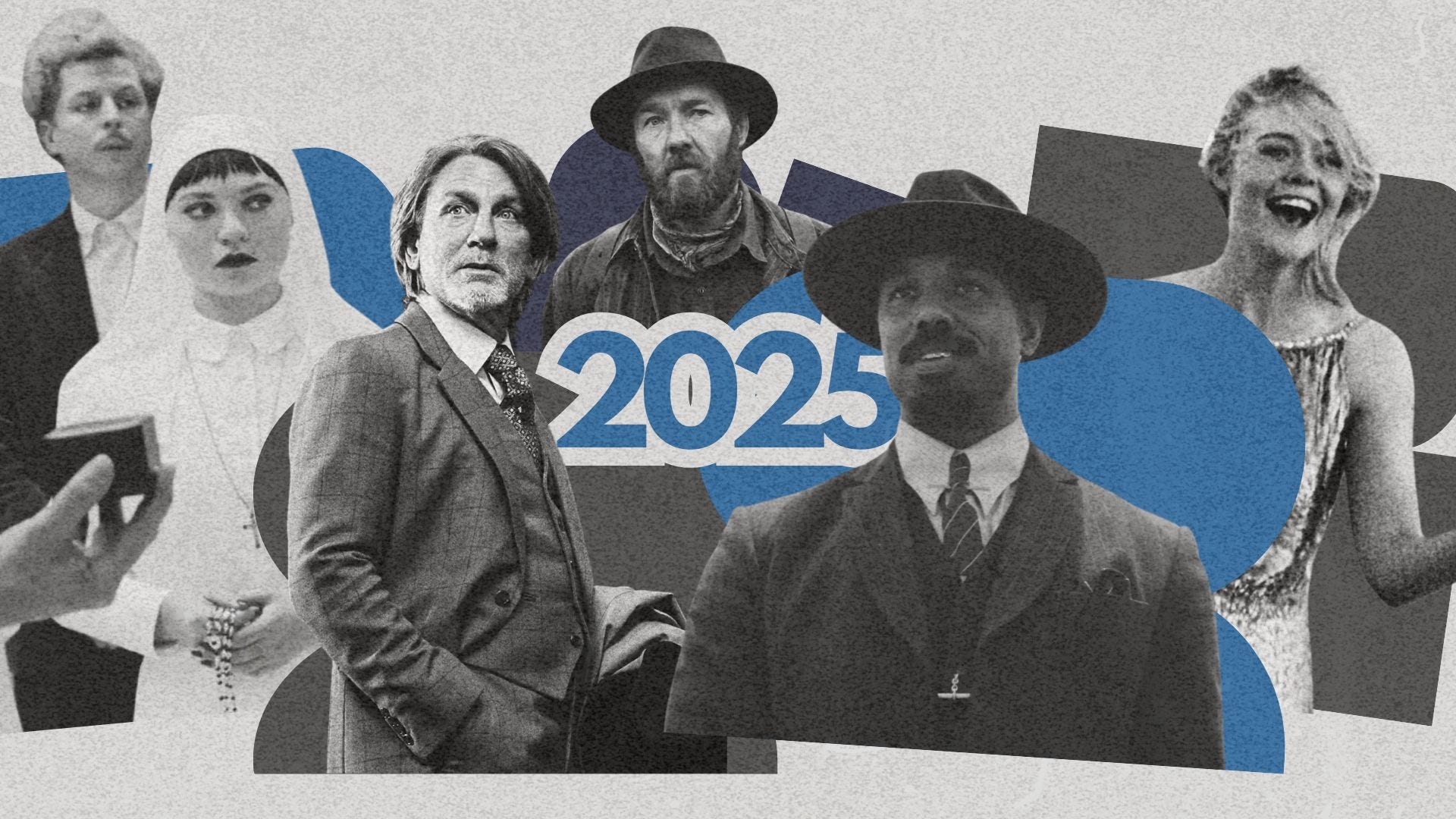
In 2022, I started A Cloudy Picture to discuss the intersection of faith and film, uncovering Christian themes and messages in films of all genres and scales. Since its founding, the site has connected me with other critics and outlets with similar missions, including Arts & Faith and Film Fisher, where I am now a contributor.
So with a newfound network and a spiritually prolific year in cinema, I am proud to introduce A Cloudy Picture’s first end-of-year list: the Top Spiritual Movie Scenes of 2025. Critics across multiple states, countries, and faith backgrounds have contributed reflections on the cinematic moments that impacted them most from a Christian perspective.
One theme surfaced with remarkable consistency throughout the year: light and darkness. Again and again, the films of 2025 turned to the light and the dark in the form of song lyrics, as part of their visual language, and in the thematic foundations of their texts.
Rian Johnson’s Wake Up Dead Man (a film that was mentioned almost universally among conversations for this list) uses light to great effect, particularly for moments of spiritual revelation or awakening. Several characters reference Paul’s road to Damascus experience, and Johnson leverages this in the film’s dramatic use of light onscreen, as one critic breaks down later. The Carpenter’s Son similarly uses light as a visual cue, with God’s light shining on Joseph following the birth of Jesus, and Joseph seeking to find that light again throughout the rest of the film.
Sinners builds its entire framework around the boundary between light and dark through vampiric mythology. Elsewhere, prominent song lyrics featured light as a central motif, from Snow White (“Where magic and light fill the air / Something good will grow”) to Sinners (“I don’t care if sun don’t shine once more / Don’t let it shine”) to Highest 2 Lowest (“I see clearer / I can finally see the light”).
Another prominent thematic recurrence this year involved works, witness, and the manifestation of belief. Several films this year wrestled with the biblical tension between the insufficiency of works to save and the undeniable power of faithful action to draw others toward Christ.
The Phoenician Scheme articulates this most directly, juxtaposing the futility of Korda’s (Benicio del Toro) debt with the quiet, persuasive devotion of his daughter Liesl (Mia Threapleton), whose lived faith softens her father’s heart. In Roofman, the fellowship of believers becomes transformative, reshaping a fugitive’s outlook on life. And in Wake Up Dead Man (like I said, this film came up a lot), Father Jud’s testimony and character act as the catalyst for Benoit Blanc’s self-described “Damascus” moment.
Countless films, in different keys, asked similar questions: What does it mean to seek the light? And how does a life shaped by belief leave an imprint on others?
This focus certainly isn’t coincidental. In a string of years marked by increased skepticism toward Christianity – a cynicism often earned, given the ways faith has been wielded carelessly or cruelly – these films were focused on the nature of witness. This is the kind of faith that draws people closer to truth through humility, kindness, and sacrifice. Just as importantly, it exposes the damage done when faith is used as a weapon.
What follows are five scenes that captured these themes and more in 2025. Taken together, they offer a revealing snapshot of a year in cinema that asked what it looks like when belief is embodied well, and what kind of light that embodiment can cast.
THE BALLAD OF WALLIS ISLAND
’Grief and Joy’
By BRIAN DUIGNAN
ScreenAttention
—
“Now is your time of grief, but I will see you again and you will rejoice, and no one will take away your joy.”– John 16:22b
Grief giving way to joy. It was a promise that must have seemed outlandish when Jesus gave it to his disciples at this moment. He had just told them he would soon be going away. His followers must have looked back with grief. They would have remembered the majesty of God they had experienced while they were face-to-face with Christ. Now they faced the new fear of having to lose all of that. That grief was indeed turned to joy when Jesus sent his Holy Spirit to be with his followers after ascending to heaven. To be with Christ even after he seems to have departed - that is the joy no one will take away.
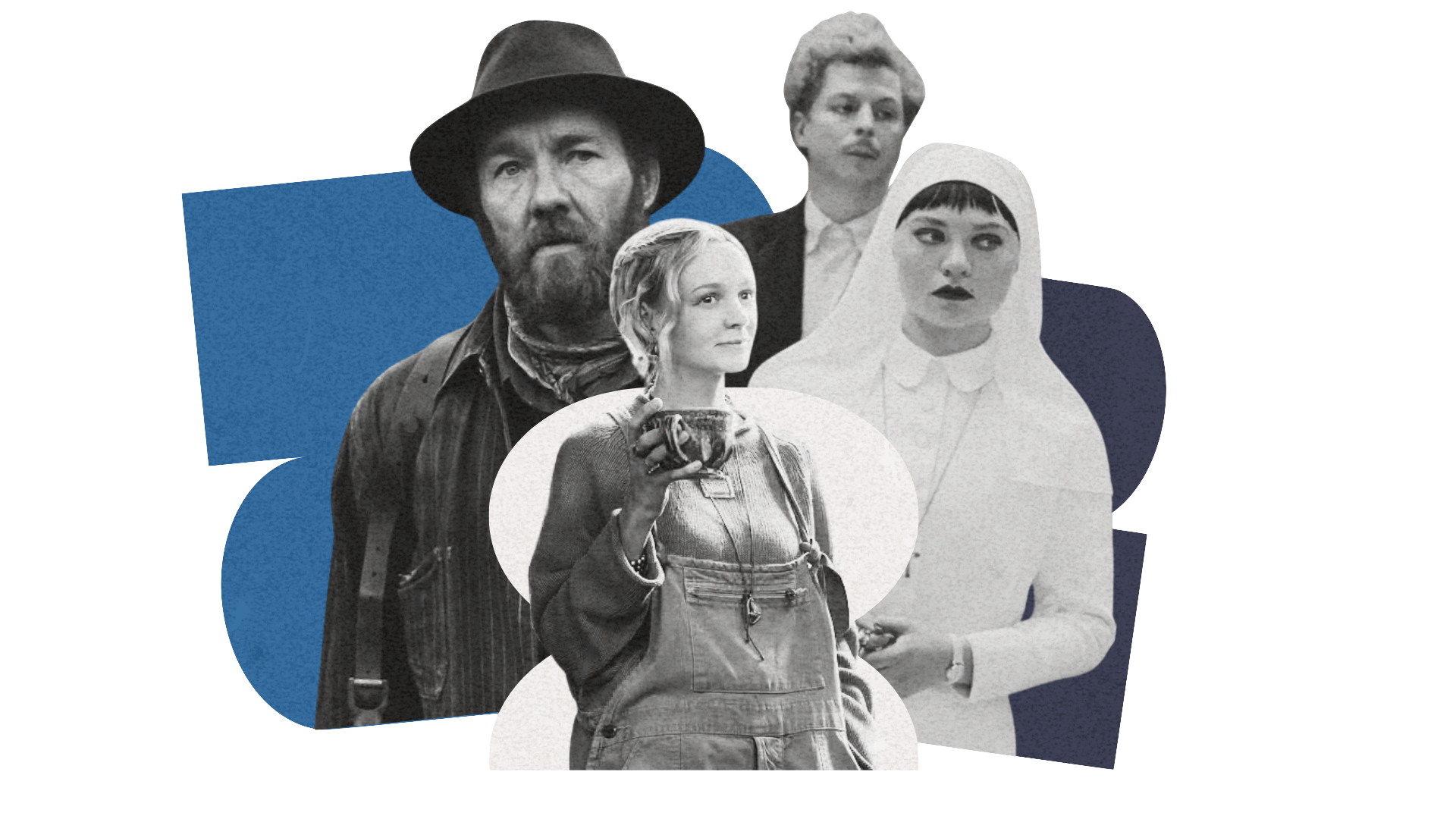
All of this came back to my mind as I reflected on a scene near the end of this year’s The Ballad of Wallis Island. In this lovely film, a middle-aged widower attempts to bring back something he has lost. It is a loss that has been a grief to him for years. He invites the living members of the disbanded folk duo McGwyer Mortimer to come perform a concert for him. This musical pair has long been beloved to both him and his late wife.
When he invites the two artists to play together again for him, he is trying to summon the majesty of the past right there on the beach behind his remote Welsh island home. I will not spoil details, but I can say that when the film arrives at that island beach we are surprised at how it has gotten there. This special scene deals with grief and joy in a way that calls out to my own experience as a Christian. It unites a grief for and yearning remembrance of the past with a looking forward to joys and new life to come.
I look back on the words of Scripture and history to see the Christ who walked the earth. I strain my ear and heart to see how the Holy Spirit is bringing Christ into every waking moment of the now. I look ahead to the joyful hope of seeing Christ face-to-face in eternity. Like the characters in this scene, I am experiencing all of these at once as if they are part of the same trembling breath.
THE PHOENICIAN SCHEME
‘I’ll Cover the Gap’
By TIMOTHY HOUSE
Film Fisher
—
Zsa-zsa Korda spends most of The Phoenician Scheme trying to manipulate everyone and everything around him. Korda, the sort of man Friedrich Nietzsche admired and propped up as the ideal, seems unstoppable in his quest to fund the great project of his lifetime, and all he needs to do is convince his partners in the venture to cover a portion of The Gap, an amount of money Korda describes as “all of my fortune and a little bit more.”
In my favorite scene in the film, after Korda has professed to his daughter a desire to become a Christian like her, he declares, “I’ll do it. I’ll cover the gap.” In order to accomplish the world-changing infrastructure project he has dedicated his life to, the man who has lived his whole life robbing from Peter to pay Paul and vice versa realizes that the only way to accomplish his purpose is to accept the price it will require and pay it himself.
“It’s me. I’ll cover the gap. Everything we got, our entire fortune, plus a little bit more. I proceed as a silent partner, taking a complete loss of all my assets with no opportunity for any future upside, and I’m still on the hook for unlimited debts and deficits. Fine. I’ll do it. The slaves will be paid. The famine will be finished. We’ll beat those bureaucrats. And my most important project of my lifetime comes to pass...without us.”
That act of selflessness represents Korda’s conversion, and it is one of the most moving and inspiring pieces of character development I’ve encountered at the movies this year.

SINNERS
’This Little Light of Mine’
By CHRISTIAN JESSUP
A Cloudy Picture
—
Unless you’re a Marvel fan, you rarely see a post-credits scene on lists of the best film moments. But in the case of Ryan Coogler’s Sinners, a brief, special moment follows the entirety of the credits and ties together this theologically rich film about temptation, cultural and religious appropriation, and, of course, vampires.
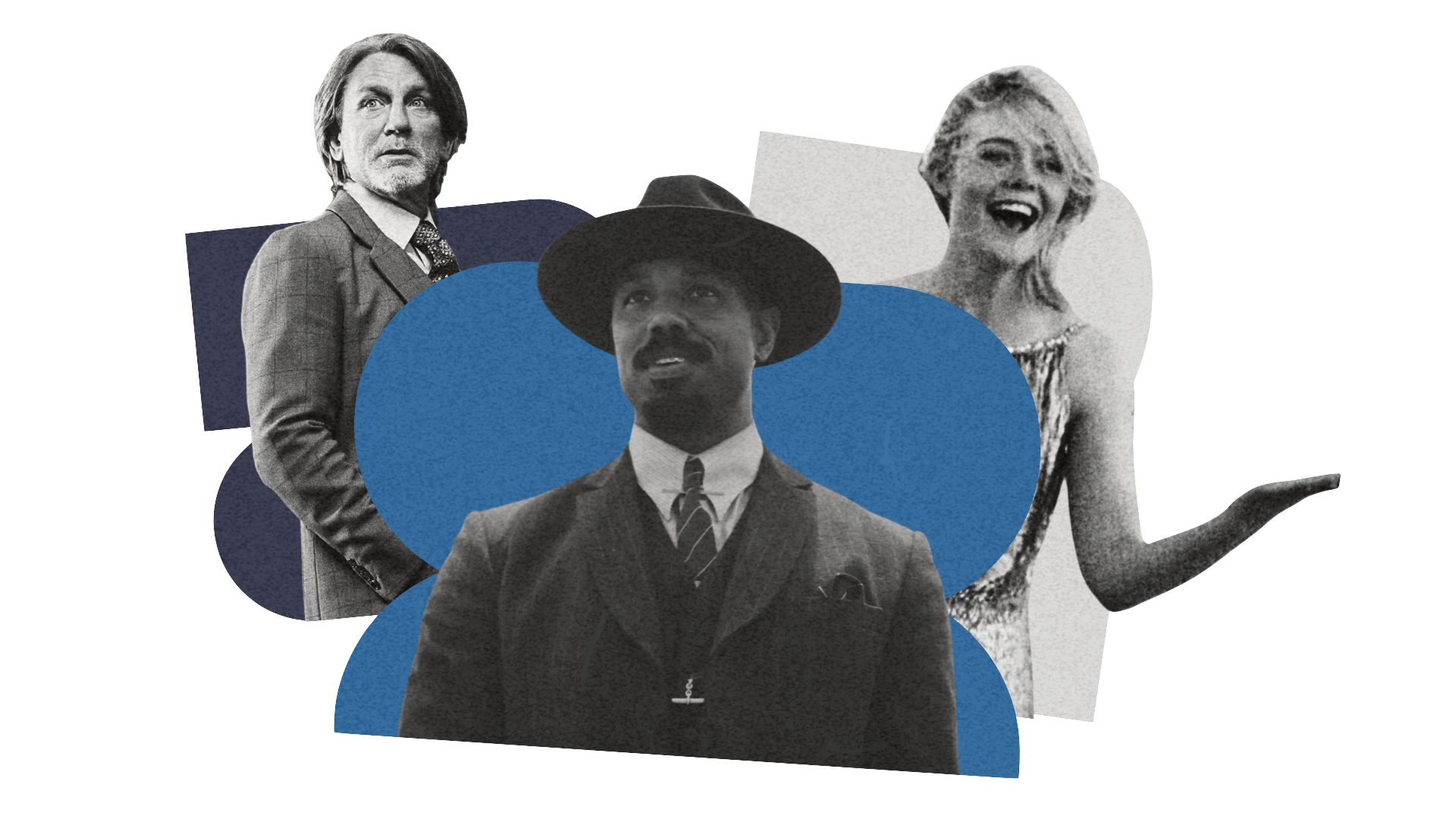
In the scene, Sammy sits in an empty church and sings his own unique arrangement of This Little Light of Mine. Throughout the film, Sammy grapples with the choice imposed by his father: singing the blues or embracing religion. In a standout sequence midway through Sinners, he sings “I’m full of the blues, holy water too,” acknowledging the dichotomy within himself. And near the film’s end, Sammy rejects his father’s command to stay in church and drop the guitar, seemingly denouncing faith to pursue the blues. But this post-credits sequence implies Sammy has at last embraced Christianity and the blues, realizing that both live inside of him. He doesn’t have to reject one to love the other.
The song choice itself also carries significance. Light and darkness play a large role in Sinners, from the use of vampires as antagonists (who come out at night and burn in sunlight) to the use of light and shadows in the film’s cinematography. In what can only be described as the antithesis to This Little Light of Mine, patrons of the juke joint sing Pale, Pale Moon during the peak of the night’s debauchery, featuring lyrics such as “I don’t care if sun don’t shine once more” and “don’t let it shine.” This makes Sammy’s post-credits revelation even more powerful. Despite the fondness with which he remembers his night at the juke joint, he’s rejecting the call of darkness and plans to let his light shine.
With a fleeting glance, he looks off-camera to the cross, and the film cuts to black. It is finished.

A SENTIMENTAL VALUE / WAKE UP DEAD MAN
’Will You Pray for Me?’
By ANDREW EISENMAN
Pontificator
—
When I was younger, I worked for pastors, preachers, and bible colleges. These days, I cannot seem to stop thinking of myself as Christian, but I no longer engage with these institutions. As a result, I am for the first time surrounded by people I love for who they are, as opposed to the bond of common attendance. Some come from similar backgrounds and understand, and to others it is alien and dismissible. The two scenes in this year’s cinema that moved me with regard to faith have edified me deeply, articulating a mystery and an impulse within myself that I could not.
The first is a recurring monologue from Joachim Trier’s Sentimental Value. It’s moving in its recontextualization on and off the screen. One of the great undersung moments in entertainment journalism this year was 47 minutes into Trier’s appearance on Talk Easy with Sam Fragoso, who gets Trier to read this monologue on mic.
“You know I don’t believe in God at all. We came from a home where all that was irrelevant. We weren’t baptized. My sister and I had a civil confirmation just for the money. Then I had this kind of crisis. I was alone in the house again, lying in bed crying. I know everyone lies in bed crying at some point, but someone said praying isn’t really talking to God. It’s acknowledging the despair to throw yourself on the ground because that’s all you can do.”
“It’s acknowledging the despair to throw yourself on the ground because that’s all you can do.” So often, those who reject or avoid the word “faith” see religion as a tool of oppression and pain. They are historically more than correct. But many mistake correlation for causation. To pray to something larger than yourself is one of the great universal impulses, essential to the human condition. You can call it hope, you can call it desperation, delusion, or determination, but I think Trier summed it up as universally as possible. The expression of despair. That’s prayer.
The other scene is of course, Father Jud praying on the phone in Wake Up Dead Man, the most lauded sequence in the film and the faith scene everyone is talking about:
But I have yet to see it discussed in conversation with Sentimental Value, and their shared rejection of organized religion.
Father Jud’s counseling is not just an example of “a good one” when it comes to Priests, but of why the good ones persist despite the monstrous atrocities done in the name of God. Because if prayer is the universal expression of our despair, what is more commendable than to covet for yourself a lifetime of guiding and bearing witness to it?
And like all things, a practice does not have to be your profession in order for it to be your calling. In this way, the exvangelical Rian Johnson illustrates the dignity in choosing a life of faith at any level, however it is defined for you. If prayer is the expression of despair, then to carry the faith, to hope, even to decide there is just one life so live it well, it is all to say “Life sucks, but it’s better because there are others in it.” What a wonderful thing to believe.
WAKE UP DEAD MAN
’Father Jud Meets Benoit Blanc’
By ZANE GRAY
Zane’s Take at the Cinemas
—
2025 has been a fantastic year in film both for theatrical releases and streaming. But there’s also a surprising amount of movies this year that address the topic of faith and religion. One scene that struck me most comes from the latest chapter in the Knives Out series Wake Up Dead Man. It’s the first time Rian Johnson has played with faith-based material, but after he knocked it out of the park with Knives Out and Glass Onion, I had all the confidence in the world that Wake Up Dead Man would be another slam dunk. Sure enough, it was.
The scene that ultimately serves as the major backbone for our two main characters’ journeys is when we’re first introduced to Benoit Blanc (Daniel Craig), who walks into a church only to stumble upon Father Jud Duplenticy (Josh O’Connor). They introduce themselves and have a brief conversation about their stance on church and their relationship with God. When Jud asks Blanc about his history with faith, Blanc gives a harsh but powerful speech about the damaging and devastating impact that religion has caused on society and various cultures. In that moment, the lighting gives us a cold look, matching the very bleak tone of what he’s describing.
But things then shift to a more positive note. Jud, understanding all of Blanc’s concerns, adds that maybe there’s a deeper truth to all of the “stories” that the church tells, and as he does so, a beam of light shines right through the window behind him. Put another way, the sun comes out as Jud understands Blanc’s feelings towards the church but still explains his own faith. It’s earnest and sincere without invalidating Blanc at any moment. The scene isn’t just great writing and immaculate performances; it’s a moment that’s deeply profound and contains something that faith-based movies often forget to convey.
As cinema continues to wrestle with doubt and belief, darkness and light, I hope this list serves as both a reflection on the year behind us and an encouragement to watch closely in the year ahead. I’d love to hear which moments stood out to you, and how this year’s films shaped your own viewing experience as a Christian. If a scene moved you in ways we didn’t capture here, comment below and help expand how we talk about faith and film.