
A Christopher Nolan Retrospective | Cinema Snapshots
My thoughts on the spiritual themes in Christopher Nolan's filmography

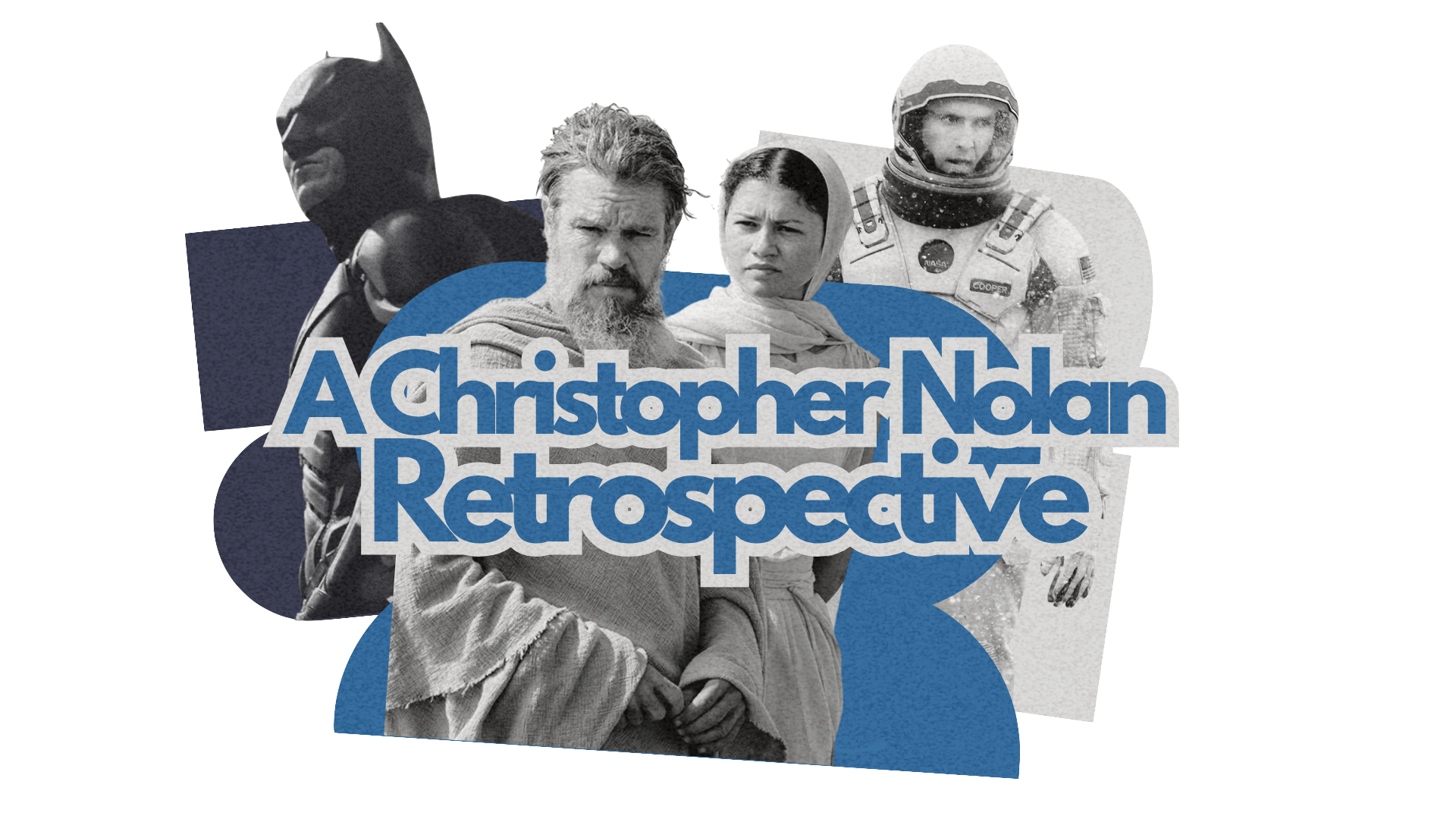
Typically at the beginning of each month, I reflect on what I watched the prior month and provide a quick “snapshot” of my thoughts on those films. But with the release of The Odyssey in July, my mind has been on Christopher Nolan’s latest film, as well as the rest of his filmography.
So enjoy my thoughts on The Odyssey below, as well as a roundup of my past writing on the works of Christopher Nolan.
A Brief Christian Review of 'The Odyssey' Ending

I was left pretty speechless after watching The Odyssey, the definition of “epic” from its tactile production and natural filmmaking style to its emotional performances and long runtime. Russell Moore and Cole Burgett have both done an excellent job in breaking down Christian themes from the film, which span everything from the Golden Rule to our innate…
Oppenheimer (2023)
In 2023, Oppenheimer broke box office records and won Best Picture at the Academy Awards. The film was also voted #1 by the Arts & Faith Ecumenical Jury. I’ve included my Arts & Faith write-up below, as well as my breakdown of the thematic similarities between Jurassic Park and Oppenheimer.


Interstellar (2014)
I was lucky enough to catch the 2025 Interstellar re-release with my wife on my birthday, my first time seeing it on the big screen since it first came out in 2014. It’s fascinating to witness a film’s reclamation in real time (it’s risen from a 3.8 to a 4.4 average rating on Letterboxd since release), but I think part of the newfound appreciation for the film is in its rewatch value. Once you know where the film is leading, you see how love isn’t just a corny sentiment that Nolan is squeezing in – it’s the driving force behind the entire film.
Much has been written about Interstellar since its release, but one under-discussed component is its subtle representation of the holy trinity. The film gives us Cooper, the father who loves his children and ventures into the terrifying unknown of space to redeem humanity from a dying earth. Then there is his daughter, Murphy, who stands as the child tasked with the work of restoration, ultimately using the wisdom of her father to bring salvation to earth. Finally, there is the mysterious presence of “Murph’s Ghost,” acting as an unseen, guiding spirit to shape the hearts and actions of others in the film.
These three roles work together to save the world, even if the mechanics of how they intercede remain beyond the grasp of our characters. They may not understand the exact science, but the protagonists accept that they’re being held by a triune love reaching across time and space, and sustained by a grace and peace they aren’t fully capable of comprehending.
“Maybe [love] means something more—something we can’t yet understand. Some artifact of a higher dimension.” - Dr. Amelia Brand, Interstellar
“For my thoughts are not your thoughts, neither are your ways my ways, declares the Lord.” - Isaiah 55:8

Inception (2010)
Inception was an immediate favorite of mine upon release in 2010, but I recently re-evaluated it for FilmFisher, comparing its protagonist’s inward journey to the biblical story of Lot. In addition, I dug back into my archives and found a musical analysis of the film I conducted back in college. I interned with Hans Zimmer in 2017, so I’ve always had a fondness for his collaboration with Nolan on films like Inception.


The Dark Knight Trilogy (2005-2012)
Near the end of Christopher Nolan’s first Batman film, the caped crusader delivers the film’s thesis by repeating a quote he heard from Rachel Dawes: “It’s not who I am underneath, but what I do, that defines me.” On the surface, this is Bruce’s subtle way of revealing his identity as Batman to Rachel. But this line provides a foundational understanding of Bruce’s character arc. Both Bruce Wayne (the seemingly shallow playboy and Batman (the fear-inducing, lawless vigilante) are just masks; neither persona defines him. Instead, he is defined entirely by his mission: to restore justice to Gotham and prove that the city isn’t “beyond saving.”
This concept of definition-by-deed can also be found in the Gospels, where the writers argue that Christ’s signs and miracles define him. Peter’s identity realization in Matthew, “You are the Christ,” comes after Jesus feeds the four thousand, and during Holy Week these signs come to a pinnacle. Jesus abandons the traditional expectations of power to wash the feet of his disciples, redefines the covenant through the breaking of bread, and ultimately offers his own body as the supreme sacrifice on the cross.
There is a striking parallel here in how Nolan presents the dark knight. Just as Christ’s body becomes present inside of Christians when we take the eucharist, Batman in the film acts as a necessary, sacrificial presence embedded within the city’s veins (this theme would come to the forefront in the sequel films). By choosing to endure the city’s darkness and bear the weight of its corruption, Batman becomes a constant, tangible reminder that Gotham is not beyond redemption, a sign that even in a city defined by corruption, a commitment to justice and salvation can transform the body and the soul, and infuse a decaying environment with the hope of a new, restored earth.

What are your favorite Christopher Nolan films? Are there any spiritual themes that stand out to you in his works?